

I used to “prepare” for interviews by hoarding tabs: leadership principles, case prompts, system design notes, a spreadsheet of STAR stories. It looked impressive. It also made me scattered. The shift that actually moved the needle for me was treating interview prep like a focused study plan: clear phases, small daily reps, and a review loop that made the important things automatic.
Below is the schedule I wish I had the first time I interviewed for a promotion-level role, when the stakes felt high and my attention span felt… not.
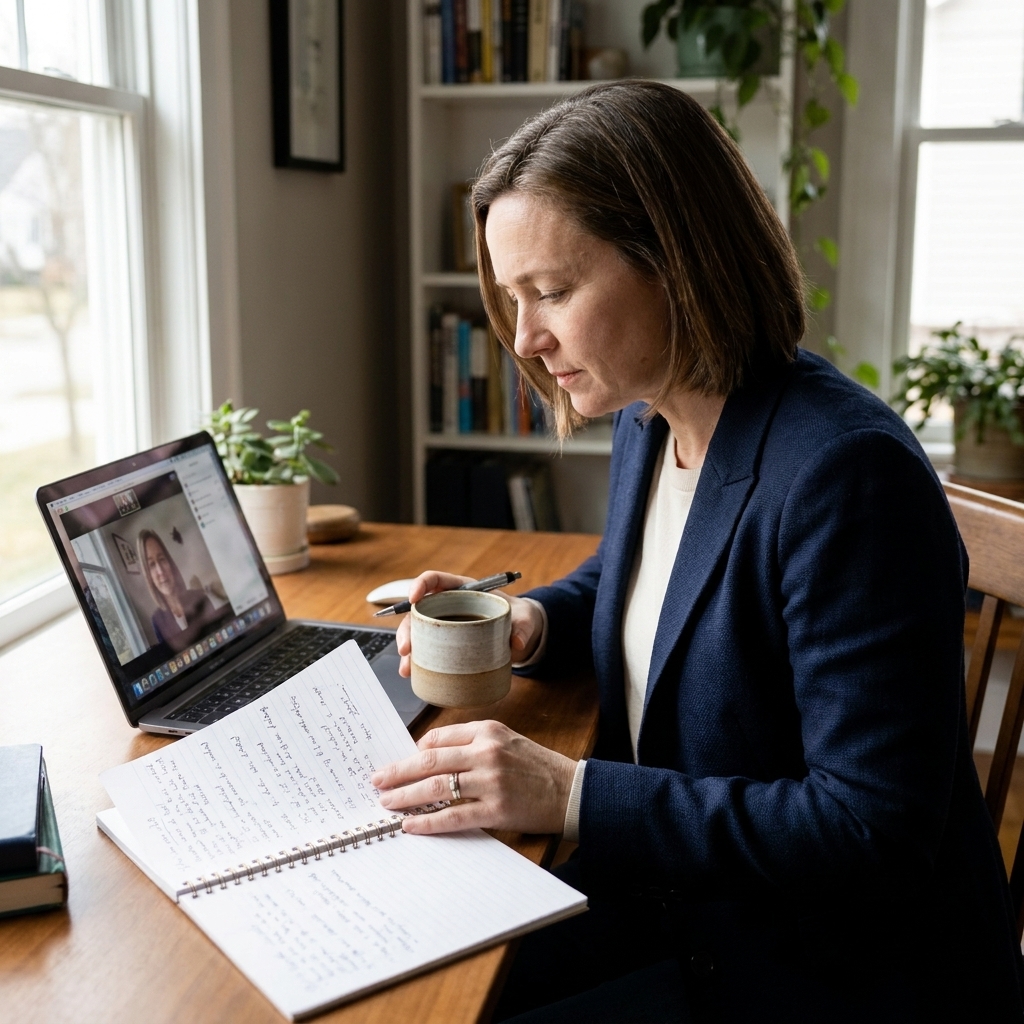
Design rules for a focused interview schedule
Before we talk week-by-week, here are the rules that keep this plan realistic and effective even when you are working full-time.
- Build around three lanes: behavioral, technical, and case or work-sample. In my experience, many candidates overfeed one lane and starve the others.
- Short reps beat occasional marathons: 45 to 75 minutes most days is better than one exhausted Saturday.
- Every study block must produce an output: a recorded answer, a solved prompt, a written case structure, or a refined story. No “reading only” blocks.
- Use spaced repetition: revisit the same core stories and core concepts on a schedule so recall gets fast under pressure. If you want a learning-style friendly way to do this, see Spaced Repetition by Learning Style.
- Protect energy, not just time: put your hardest work in your best hours. I like planning this using chronotype-based studying.
- Plan for wobbles: you will miss a day. A good schedule has a built-in catch-up lane. If you fall behind, use the gentle reset steps in How to Get Your Study Plan Back on Track After Falling Behind.
Pick your timeline: 6 weeks, 4 weeks, or 2 weeks
This article lays out a 6-week plan because, in my experience, it is a sweet spot for getting depth without feeling like you are cramming every night. If your timeline is shorter:
- 4 weeks: combine Weeks 1 and 2, and keep the rest intact.
- 2 weeks: use the structure of Weeks 4 to 6, but do one technical session and one behavioral session most days. For a rapid reset style plan, borrow the pacing from 7-Day Emergency Study Plan and repeat it twice.
Set up once (60 minutes) so studying stays easy
Your interview prep dashboard
Do this on Day 0, before Week 1 starts.
- Create three lists: Behavioral bank, Technical topics, Case or work-sample types.
- Choose your tracking method: a paper planner or a digital tool is fine, but pick one. If you tend to bounce between tools, read Digital Apps vs Paper Planners for Studying.
- Define “done” outputs for each lane:
- Behavioral: recorded 2-minute and 5-minute versions of your top stories.
- Technical: timed practice set plus a one-page summary of weak points.
- Case: one full case out loud, plus a written structure you can reuse.
- Block your week: for most adults, two deep-work blocks plus three lighter blocks during the workweek is plenty, then use the weekend for one mock and one review. If time-blocking is new to you, see Time-Blocking Your Study Week for Better Retention.
A simple weekly cadence
Use this cadence as the backbone, then follow the week-by-week focus below. Think of Mon and Thu as your deeper blocks, and the other days as lighter reps unless you have extra capacity.
- Mon: Technical foundations (deep)
- Tue: Behavioral stories (light)
- Wed: Case or work-sample (light)
- Thu: Technical practice (timed, deep)
- Fri: Behavioral delivery + question practice (light or catch-up)
- Sat: Mock interview (rotate lane each week, deep)
- Sun: Review and light spaced repetition (light)
If you have short attention spans or you are coming home depleted, structure each block as a checklist-style session. My favorite approach is in Build a Study Session You Can Check.
How to pick what to practice
The easiest way to waste prep time is to practice random questions that are not close to your target role. I keep my prompt selection tight by pulling from three places:
- The job description and leveling signals: turn each requirement into at least one behavioral question and one work-sample style prompt. If the role asks for stakeholder management, I want a story and a scenario that force tradeoffs and communication.
- Your actual work: choose stories from recent projects where you can be concrete about decisions, constraints, and results. Interviewers can feel when you are borrowing someone else’s narrative.
- The interview format: if you expect a timed assessment, do timed sets. If you expect a live case, practice out loud. If you expect a presentation, rehearse with a visible timer and a one-page outline.
If you are unsure what a role is really testing, I find it helpful to map it to a small set of repeatable skills and drill those. The framing in Career Skills Guide can help you name the skills so your practice is not vague.
Week 1: Clarify the target and build your story bank
Week 1 is about alignment. High-stakes interviews punish vague prep. Your goal: know what the role is actually evaluating and create raw material you can polish later.
Behavioral (2 sessions)
- Draft 8 to 10 core stories that cover: conflict, ambiguity, failure, leadership without authority, influencing, mentoring, stakeholder management, and a measurable win.
- Reminder: one story can cover multiple themes. You are building range, not a separate story for every label.
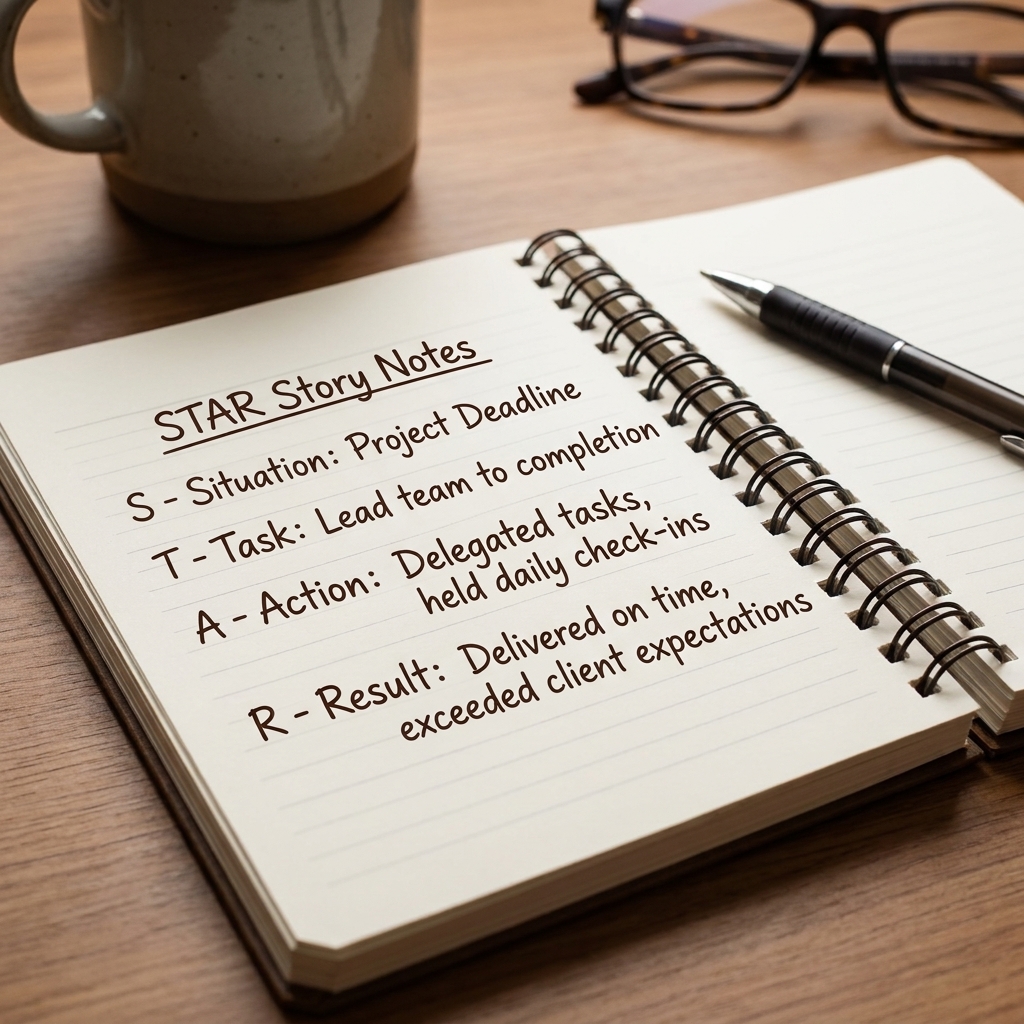
- For each story, write one sentence per STAR (Situation, Task, Action, Result). Keep it ugly and short for now.
Technical (2 sessions)
- Create your topic map: the 10 to 15 topics most likely to be tested.
- Do two diagnostic sets under light time pressure. Identify patterns, not perfection.
Case or work-sample (1 session)
- List the common case types for your role (for example: market sizing, product sense, operational tradeoffs, troubleshooting, strategy, financial modeling, system design). Pick the top two.
- Do one case slowly, focusing on structure and clarifying questions.
End-of-week output
- A one-page overview: “What this interview is testing.”
- A messy but complete story bank.
- A prioritized technical topic list with your weakest three circled.
Week 2: Build structures you can repeat
Week 2 is about creating repeatable patterns. When nerves hit, structure is your safety net.
Behavioral: turn stories into answers (2 sessions)
- Pick your best 6 stories.
- Record yourself delivering each in 2 minutes, then again in 5 minutes.
- After each recording, write down only: one strength and one fix. Keep it kind and specific.
Technical: concept summaries + practice (2 sessions)
- Create one-page summaries for your top 5 topics. Aim for recall cues, not textbook notes.
- Do one timed practice set, then do error review using the “teach it back” approach. If you like that method, see The Feynman Technique for Visual, Auditory, and Tactile Learners.
Case: your default case script (1 session)
- Write a reusable opening script: clarifying questions, assumptions, and a clean structure.
- Practice the opening out loud until it feels natural.
End-of-week output
- 6 recorded behavioral answers (2-minute versions).
- 5 one-page technical summaries.
- A written case opening you can repeat under pressure.
Week 3: Add difficulty, not hours
This is the week where people panic and add more hours. Instead, keep hours steady and increase difficulty by adding time pressure and realism.
Behavioral: add follow-ups (2 sessions)
- For each core story, practice answering 2 follow-up questions: “What would you do differently?” and “How did you measure impact?”
- Practice one “values” question: why this role, why now, why you.
Technical: timed drills and review (2 sessions)
- Do two timed sets that match the interview format.
- Spend a full session on error logs: categorize misses (knowledge gap, misread, time management, careless).
Case or work-sample: full run-throughs (2 sessions)
- Do two full cases out loud or two full work-sample simulations.
- After each, write a short debrief: structure quality, communication, and one improvement.
End-of-week output
- An error log you can actually act on.
- Two complete case run-throughs with debrief notes.
Week 4: Mock week and repair
Week 4 is where prep starts to feel like the real thing. The focus is performance under pressure, plus quick repair loops.
Two mock interviews (minimum)
- Mock 1: Behavioral heavy (30 to 45 minutes).
- Mock 2: Technical or case heavy (45 to 60 minutes).
Mock feedback if you have no partner
You can still get useful feedback solo if you make it specific. Record your mock and score it with a tiny rubric:
- Structure: did I have a clear beginning, middle, end?
- Signal: did I answer the question being asked, or the one I wanted to answer?
- Evidence: did I use numbers, constraints, and real decisions?
- Pace: did I run long, ramble, or freeze?
Then pick one 10-minute drill for the week. One fix, repeated, beats five fixes you never revisit.
Technical repair blocks (2 sessions)
- Re-study only the topics that appeared in your misses.
- Re-test with a short timed set to confirm the fix sticks.
Behavioral polish blocks (2 sessions)
- Re-record your top 6 stories.
- Trim the fluff: keep context short, spend time on actions and decisions.
If you are juggling this with work, you may like the pacing ideas in A Realistic Study Schedule for Full-Time Workers.
Week 5: Make answers crisp
In high-stakes interviews, clarity beats complexity. Week 5 is about compression: saying the right thing faster, with fewer words.
Behavioral: the “headline first” drill (2 sessions)
- Answer each question with a one-sentence headline before the story. Example: “I handled a cross-team conflict by resetting expectations and building a shared metric.”
- Then deliver the story in 2 to 3 minutes.
Technical: mixed-topic sets (2 sessions)
- Do mixed sets that force switching, because real interviews rarely stay neatly grouped.
- Practice narrating your thinking clearly, not silently solving.
Case: strong openings and clean conclusions (2 sessions)
- Do two cases focused on: clean structure, explicit assumptions, and a confident wrap-up.
- Practice a short recommendation: decision, reasoning, risks, and next steps.
End-of-week output
- A “top 10” list of your best headlines for common behavioral questions.
- Three formerly-weak technical topics with proof: each has an updated one-page summary plus two consecutive timed sets where you hit your target accuracy or time.
Week 6: Taper and rehearse
The last week is not the time to cram new material. It is the time to make recall easier and keep your nervous system calmer.
Early week: final mocks (2 sessions)
- One full mock that matches your expected format.
- One lighter mock that focuses on delivery and confidence.
Midweek: spaced repetition only (3 short sessions)
- Run your core behavioral stories once per day, out loud.
- Do short technical recall: definitions, steps, and your common pitfalls.
- Do one case opening per day, just the opening.
Day before: stop studying early
- Review your headlines and a few “anchor wins.”
- Pack what you need, plan your arrival, and sleep.
Interview day: a 12-minute warm-up
- 2 minutes: breathe and loosen shoulders.
- 5 minutes: read your headlines and one impact story.
- 5 minutes: talk through one case opening or technical explanation out loud.
Daily time blocks that stay doable
Here are three options depending on your capacity. Pick one and stick to it.
Option A: 45 minutes (busy week minimum)
- 10 minutes: spaced repetition review (stories or key concepts)
- 30 minutes: one focused drill (technical set, case opening, or behavioral recording)
- 5 minutes: debrief note and next step
Option B: 75 minutes (ideal most weekdays)
- 10 minutes: review
- 50 minutes: deep practice
- 15 minutes: error log or rewrite one story
Option C: 2 hours (weekend mock day)
- 60 minutes: mock interview
- 30 minutes: review and pick one fix
- 30 minutes: drill the fix
If concentration is your main bottleneck, structure these blocks with short, repeatable Pomodoros and a clear “done” output. Start with Pomodoro by Learning Style, then adapt.
Adapt for your learning preferences
I do not believe in one-size-fits-all studying, especially for interviews where performance anxiety changes how you think. I treat “learning styles” here as practical preferences for how you like to take in information and how you like to practice, not as a diagnosis. The goal is to keep the schedule focused while varying the modality so you stay engaged and recall stays strong.
Visual
- Turn technical topics into one-page “anchor sheets” with boxes and spacing.
- Use mind maps for case structures. See Mind Mapping for Complex Subjects.
- Try a color-coded weekly plan if it helps you see balance at a glance: Color-Coded Study Schedule for Visual Learners.
Auditory
- Record answers and listen back on a walk.
- Practice explaining your technical solutions out loud, even when studying solo.
- If you commute, build a routine around audio rehearsal: The Commuter’s Study Plan for Auditory Learners.
Read-write
- Maintain a tight error log and rewrite your best answers as short scripts.
- Use a daily review note method to keep recall fresh: Cornell Notes for Daily Review.
- If your notes are messy, clean them once a week only, not every day. This guide helps: From Messy Notes to Mastery.
Kinesthetic
- Do standing whiteboard practice for cases and technical explanations.
- Use physical index cards for behavioral headlines and follow-ups.
- Make your mock interviews active: pace, gesture, and practice with a real timer.
If you are not sure your schedule matches your natural patterns, check the red flags in 7 Signs Your Study Plan Clashes With Your Learning Style.
Common schedule problems
“I keep avoiding the hardest lane.”
Make it your first block of the week when energy is highest, and shrink it. A 25-minute case opening drill counts.
“I practice, but I do not feel improvement.”
You need a tighter feedback loop. After each session, write one sentence: “Next time I will…” and make it measurable.
“I freeze in mocks even when I know the material.”
Add more retrieval practice and fewer notes. You want recall under light stress. Timers, out-loud answers, and mixed-topic sets help.
“My schedule keeps collapsing midweek.”
Plan one catch-up block on Friday or Sunday, and keep your weekday sessions shorter. Also consider moving deep work to your best time of day. The combo of chronotype-based studying and a high-focus plan for short attention spans is surprisingly effective.
A weekly checklist
Copy-paste this into a notes app or write it on a single page. This is the weekly check that keeps your prep balanced.
- Behavioral: 2 story recordings + 1 follow-up drill session
- Technical: 2 timed sets + 1 error review
- Case or work-sample: 2 out-loud run-throughs
- Mock: 1 per week starting Week 3 (2 per week in Week 4)
- Review: 1 spaced repetition session on Sunday
If you want a structure that feels more like a routine you can live inside, not a rigid plan, you might enjoy using Kolb’s cycle as your weekly rhythm: Kolb’s Learning Cycle as a Daily Study Routine.
If this is a promotion interview
Promotion interviews often weigh scope, leadership, and decision-making heavier than trivia. Adjust your prep like this:
- Behavioral: prioritize stories showing cross-team influence, ownership, tradeoffs, and mentoring.
- Case or work-sample: focus on decisions, assumptions, and how you would lead execution after the recommendation.
- Technical: keep competence high, but spend extra time narrating how you make choices, not just what you know.
Adapting “technical” for non-software roles
I use “technical” as shorthand for the hard-skill lane in your interview, whatever that is for your role. If you are not doing algorithms or system design, swap in the closest equivalents:
- Data and analytics: metric interpretation drills, SQL or spreadsheet timed sets, experiment critique, dashboard storytelling.
- Design: portfolio walkthroughs with constraints, critique practice, redesign prompts with a timer, decision rationale drills.
- Operations and program roles: scenario planning, prioritization tradeoffs, risk logs, stakeholder role-play.
- Sales and customer roles: discovery call role-plays, objection handling drills, account planning cases, concise recap practice.
- Writing-heavy roles: timed writing samples, editing drills, summary and synthesis practice, clarity rewrites.
The plan stays the same: diagnose, drill under light pressure, review errors, then rehearse out loud.
Final note (from a recovering perfectionist)
You are not trying to become a different person in six weeks. You are trying to make your best thinking easier to access on demand. A focused schedule is not about grinding harder. It is about practicing the exact skills the interview tests, in a way your brain can repeat calmly.
If you want to read more about how I build study systems like this, you can find my author page here: Naomi Prescott.