


When I was a kid, “test prep” usually meant sitting very still and trying to force facts into my brain through sheer willpower. It worked… sometimes. More often, it felt like pressure with a side of blank-page panic.
Role-play is my favorite antidote for that. It turns review into something active, social, and specific. Instead of asking your child to “study harder,” you’re giving their brain a job to do: explain, persuade, question, defend, and connect ideas out loud.
Below are six interactive role-play activities that work especially well for elementary and middle school subjects. Each one is designed to feel like play, while still practicing many of the skills tests tend to reward: recall, vocabulary, sequencing, and clear reasoning.
Who this works with: a parent and child, siblings, or a study buddy. It works one-on-one or with a small group (just keep it short).
How to keep it stress-free
A quick setup makes the difference between “fun review” and “chaos with props.” Here are my rules of thumb.
- Keep it short: 8 to 15 minutes is plenty. Stop while it’s still fun.
- Use tiny prompts: 6 to 10 questions or cue cards max.
- Rotate roles: Your kid gets to be the expert at least half the time.
- Correct gently: Treat mistakes like clues. Ask, “What makes you think that?” then guide.
- End with a win: Finish on an easy question or a recap they can nail.
Quick materials: index cards or scraps of paper, a timer, and one “prop” if you want (a hat, a sticky note name tag, a notebook). Optional: a whiteboard and a map.
Difficulty dial: Make it easier by going open-notes or giving two answer choices. Make it harder by adding one follow-up “Why?” question, requiring one piece of evidence (“What detail proves it?”), or adding a gentle time limit.
If you want a simple rhythm for review sessions that don’t drag, I like pairing role-play with short breaks. This guide on strategic study breaks makes it easier to stop before your child hits overload.
1) Historical Press Conference
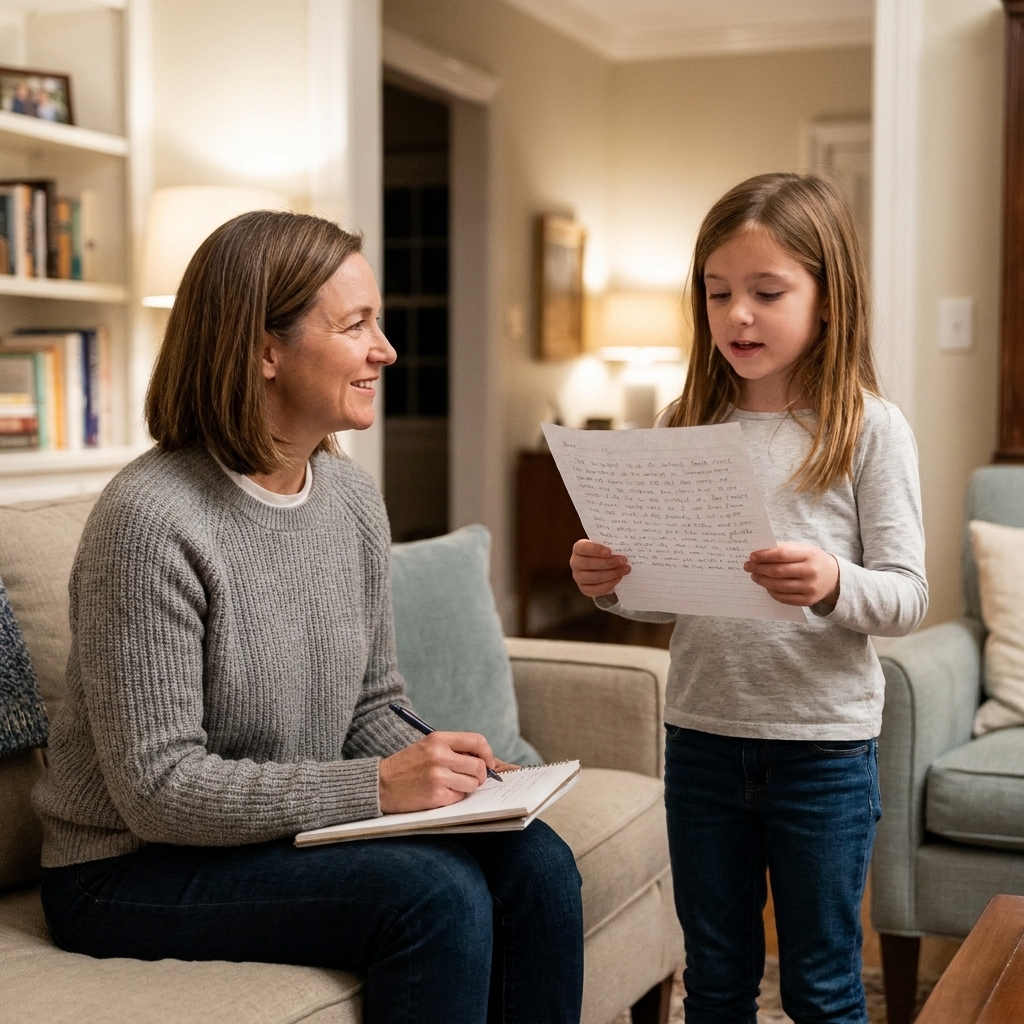
Best for: history, social studies, current events, reading comprehension
The idea: Your child plays a historical figure or eyewitness. You play a reporter asking questions.
Grade tweak: For grades 2 to 4, stick to “first, next, last.” For grades 6 to 8, add causes, consequences, and opposing viewpoints.
Setup (5 minutes)
- Pick one person or event from the unit (for example: Harriet Tubman, the Boston Tea Party, the fall of Rome).
- Write 6 to 8 “press questions” on slips of paper.
- Optional: add one simple prop (a hat, a scarf, a folder) to help them step into character.
Press question examples
- What happened first, and what happened next?
- What was your goal?
- What problem were you trying to solve?
- Who disagreed with you, and why?
- What was the short-term result? What was the long-term impact?
Make it more test-like (without making it tense)
After the press conference, ask for a 20-second recap that starts with “One important cause was…” That single sentence practices a key move behind many constructed-response questions: making a claim and backing it up.
2) Science Lab Safety Hearing
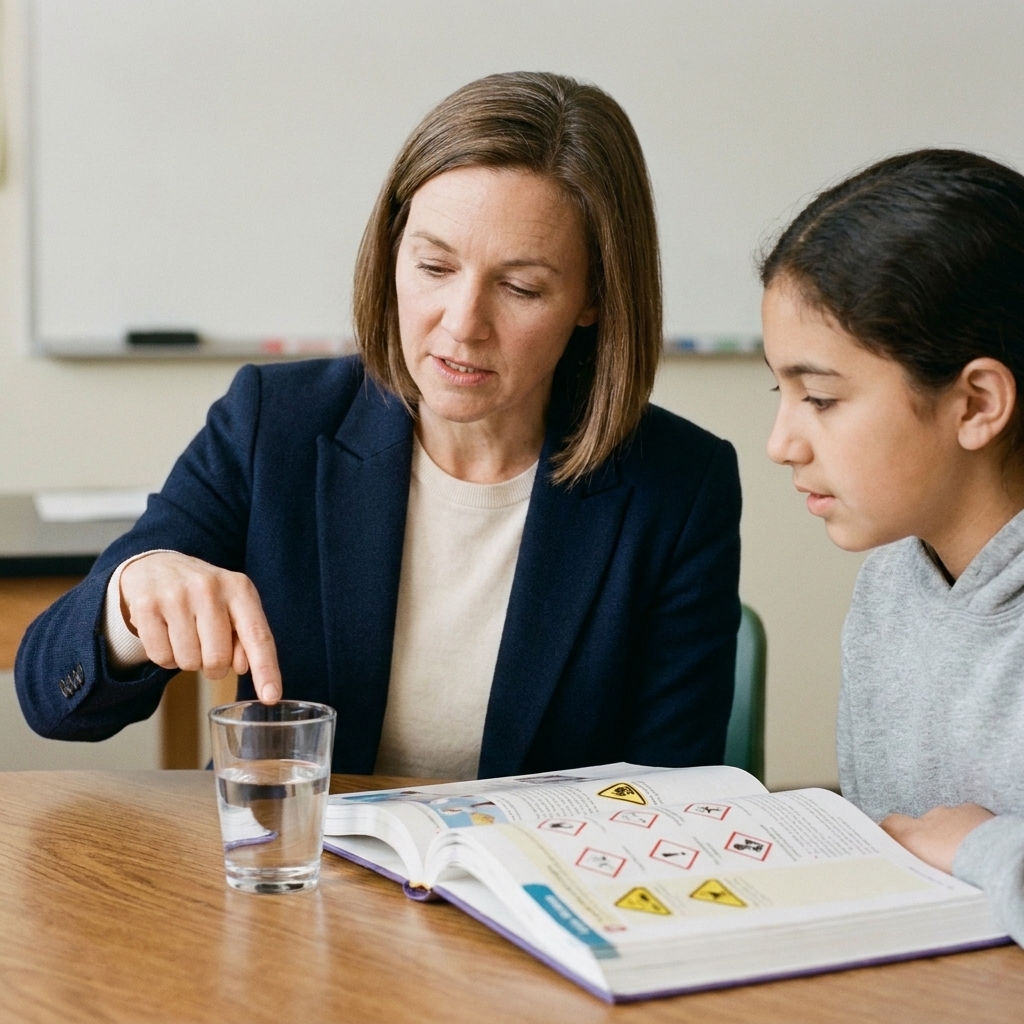
Best for: science, health, lab procedures, scientific reasoning
The idea: You run a “hearing” to investigate what went wrong in a pretend lab incident. Your child is either the safety inspector or the scientist defending their procedure.
Grade tweak: For younger kids, focus on “what happened” and “what to do next.” For older kids, add variables, controls, and evidence.
Quick safety note: Keep the “incident” completely pretend and household-safe. No real chemicals, flames, or risky experiments needed.
Setup
- Pick a topic: states of matter, electricity, ecosystems, chemical reactions, body systems.
- Create a “case” in one sentence: “The plant tank kept losing fish,” or “The circuit wouldn’t light the bulb,” or “The baking soda volcano didn’t react.”
- Write 6 to 10 questions the inspector will ask.
Question prompts that build strong explanations
- What materials were used, and what are their properties?
- What variable did you change on purpose?
- What stayed the same?
- What evidence supports your conclusion?
- If you could redo it, what one change would you test next?
Low-stress tip: Let them “pause the hearing” once to peek at notes. That keeps the activity supportive while still practicing retrieval.
3) Math Talk Show
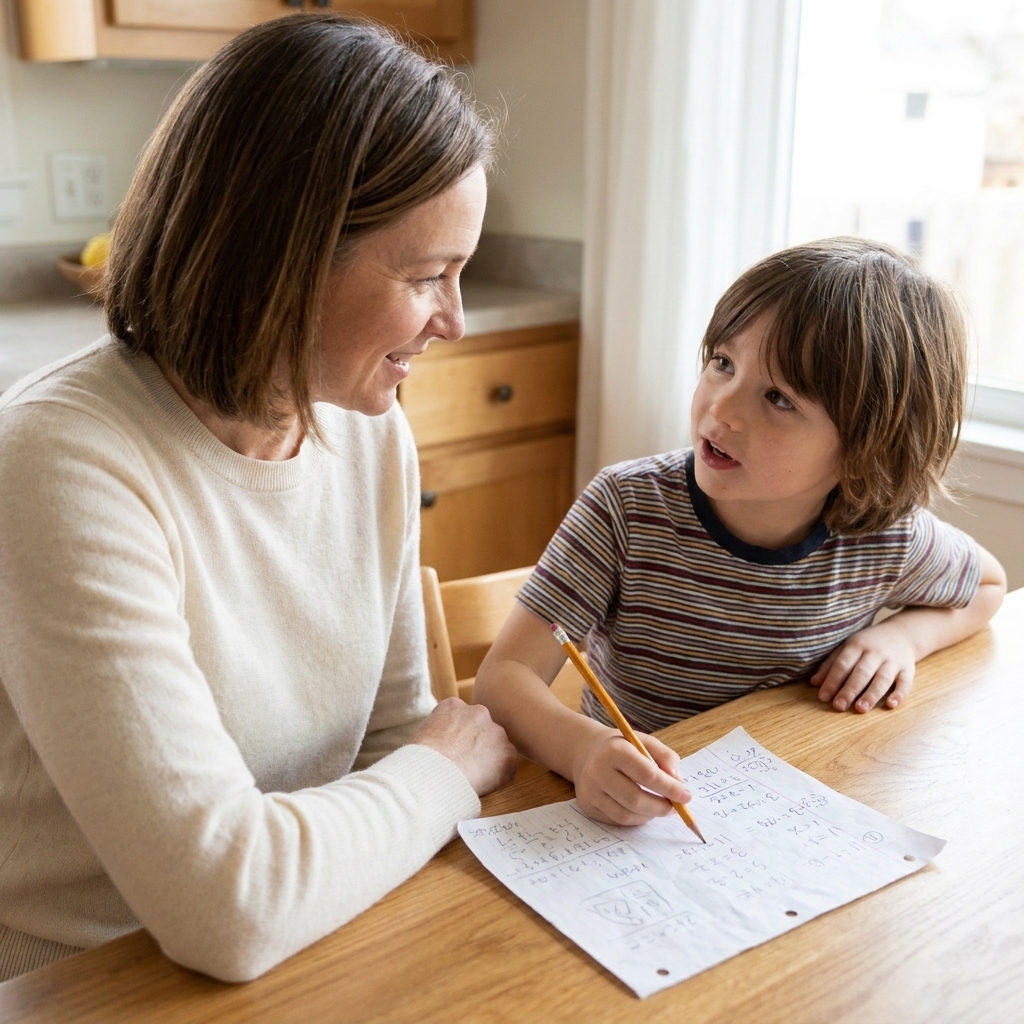
Best for: math facts, word problems, multi-step math, reasoning
The idea: You’re the talk show host. Your child is the featured guest who has to explain how they solved a problem in a way the audience can understand.
Grade tweak: For grades 2 to 4, do one-step problems and focus on the strategy name. For grades 6 to 8, add “What would change if…?” (bigger numbers, different operation, extra constraint).
How to play
- Pick 3 to 5 problems.
- For each problem, the “guest” must answer these three talk show questions:
- What was the question asking? (Restate it in their own words.)
- What strategy did you pick? (Draw, equation, number line, estimate, grouping.)
- How do you know it’s right? (Check with inverse operation, estimate, or plug back in.)
If your child freezes when asked to explain, start with a “buddy sentence starter” list: “First I noticed…,” “I chose… because…,” “I checked by….”
For more hands-on options that feel like games, you can also pull ideas from gamifying math practice and swap the “host” role into those activities.
4) Vocabulary Court
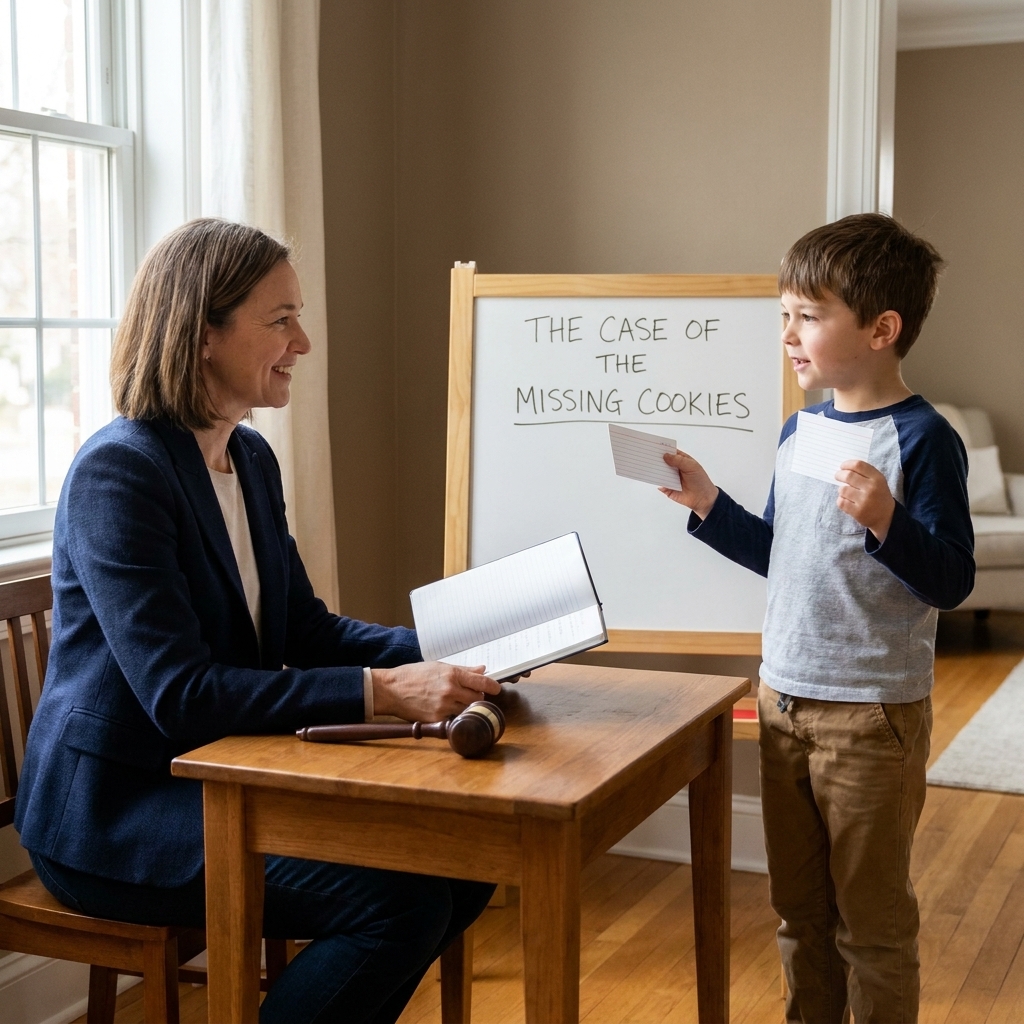
Best for: ELA vocabulary, social studies terms, science vocabulary, language learning
The idea: A vocabulary word is “on trial” for its meaning. Your child must prove they understand it using evidence.
Grade tweak: For younger kids, ask for definition plus one example. For older kids, require a synonym and a non-example too.
Roles
- Judge: decides if the evidence is strong.
- Attorney: defines the word and presents examples.
- Witness: uses the word in a sentence or connects it to a story or unit.
Evidence rules
- Give a kid-friendly definition.
- Use it in a new sentence (not copied from notes).
- Provide one example and one non-example.
- Name a synonym or a related word.
Stress-free scoring: Instead of points, the judge awards a silly title: “Clear-as-day definition,” “Best example,” “Strongest synonym.” This keeps it playful while still making the word stick.
5) Character Hot Seat
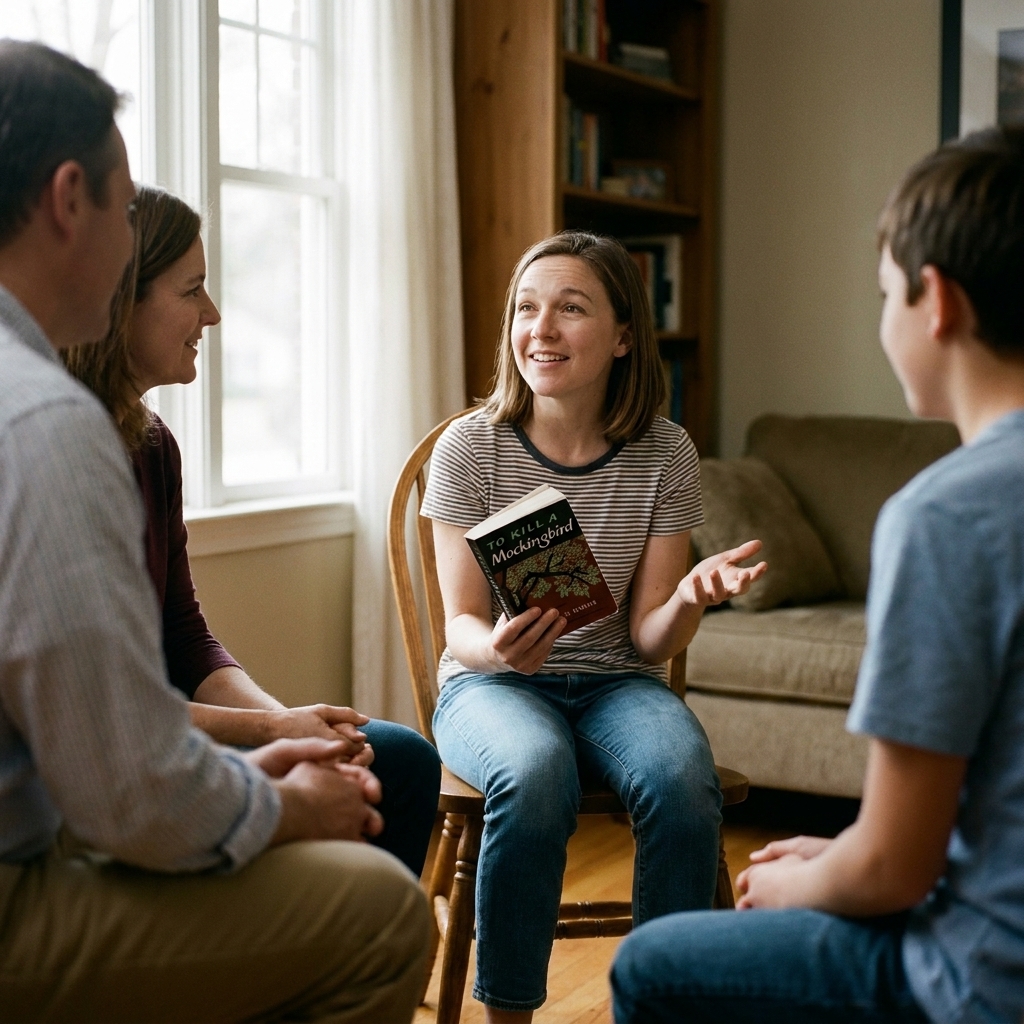
Best for: reading comprehension, literature, writing, theme and character analysis
The idea: Your child becomes a character from a book, story, or even a biography. Everyone else asks questions, and the character must answer in a way that matches the text.
Grade tweak: For grades 2 to 4, ask about feelings and actions. For grades 6 to 8, push for text evidence and theme connections.
Hot seat questions
- What do you want most in the story?
- What’s your biggest challenge, and how do you respond to it?
- What did you learn, or how did you change?
- What’s one decision you regret? Use a detail from the text.
- What would you do differently if the setting changed?
Optional upgrade: After 5 minutes, switch roles and have your child interview you as a character. When kids get to ask the questions, you’ll often see what they actually understand.
6) Geography Race Briefing
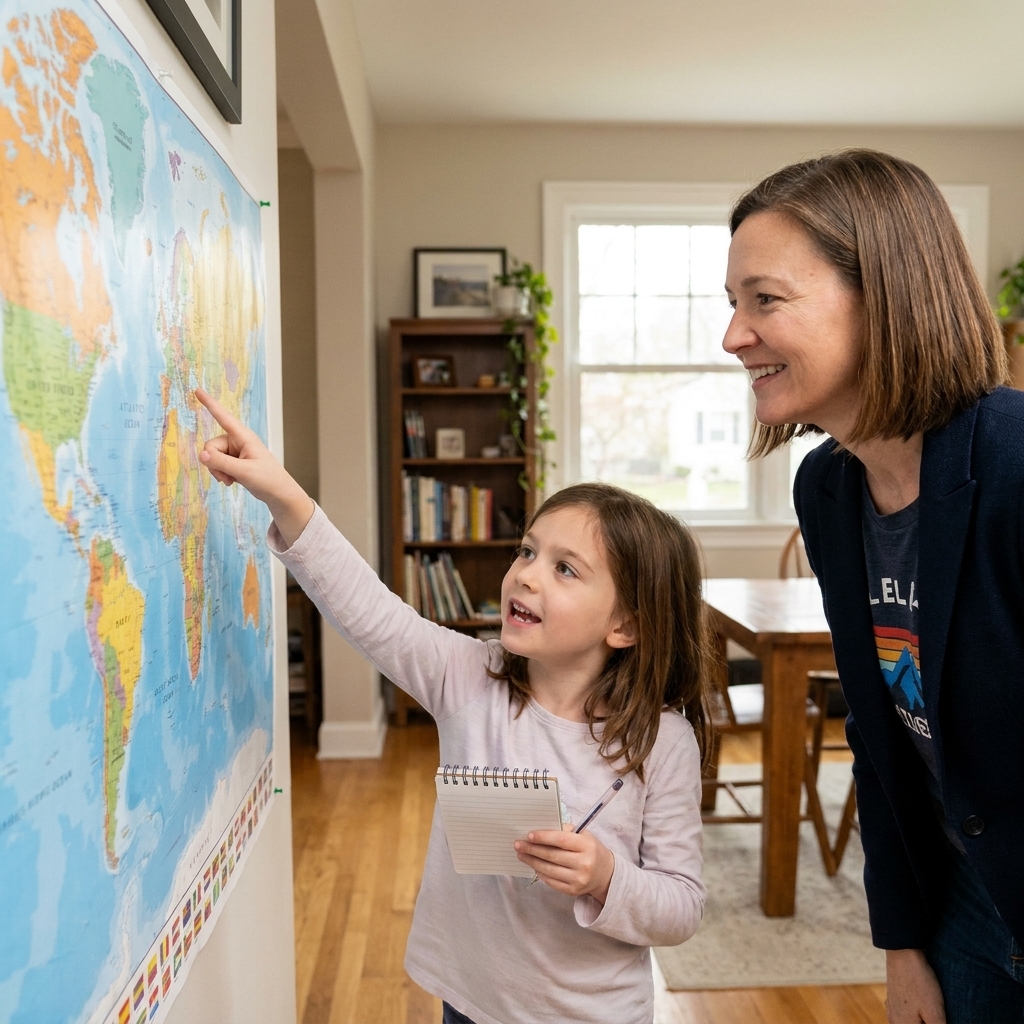
Best for: geography, civics, map skills, government basics
The idea: Your child is the “travel guide” giving a pre-race briefing. They must explain where the team is going, why it matters, and what rules or features they should know.
Grade tweak: For younger kids, focus on locating and labeling. For older kids, add climate, economy, and “why this place matters.”
How to play
- Pick 3 locations from the unit (countries, states, rivers, mountain ranges, capitals).
- For each location, the guide must cover three facts:
- Locate it: continent or region, neighboring places, direction words (north of, borders, near).
- Describe it: climate, landforms, resources, or a key landmark.
- Connect it: one historical event, civic concept, or economic activity tied to the location.
Keep it active: Have them physically walk to the map and point, or lay a few printed maps on the floor and “travel” to each one. If your child learns best by moving, you’ll find more ideas in these kinesthetic learning activities.
A simple 20-minute routine
If you want a no-fuss plan, this is the structure I use when a kid is tired, nervous, or both.
- 2 minutes: Pick the game and choose 1 topic.
- 10 minutes: Role-play (set a timer).
- 3 minutes: Quick reset break (water, stretch, pet the dog, anything calm).
- 5 minutes: Teach-back recap: your child explains the top 3 takeaways.
If your child tends to spiral when they fall behind, the kindest thing you can do is make the next step small and clear. This guide on getting a study plan back on track is written for those moments.
Troubleshooting
If your child refuses
- Offer two choices: “Press conference or talk show?” Choice creates buy-in.
- Let them start as the interviewer first. It feels safer than being on the spot.
- Make the first round ridiculously easy on purpose, then level up.
If it gets silly and off-track
- Use a “scene reset” phrase like, “Back to the hearing,” and return to the next prompt.
- Shorten the activity instead of tightening control. End it, then try again tomorrow.
If they’re anxious about an upcoming test
- Start with open-note role-play, then repeat one question closed-note at the end.
- Focus praise on process: “You explained the cause clearly,” not “You’re so smart.”
- Keep your tone neutral when they miss something. Calm is contagious.
More kid-friendly ideas
If your household is building a bigger toolkit of learning games, you can browse the full collection in Learning Activities for Kids. For a visual way to make review time feel less like nagging and more like a routine, I also love setting up a simple home command center like this visual homework board kids will use.