

I have a special kind of panic reserved for the moment you realize the exam is in a week and your notes are mostly vibes.
The good news is that one week is enough time to make meaningful gains, as long as you stop trying to study everything. This plan is built for high-yield learning: active recall, targeted practice, and just enough structure to keep you steady without burning out.

How this 7-day plan works
This is not a motivation speech. It is a triage system.
The rules (gentle but firm)
- Active recall beats rereading. You will spend more time testing yourself than highlighting.
- High-yield beats completion. Your goal is the material most likely to show up and the skills that unlock multiple question types.
- Short loops beat marathons. Think 25 to 45 minutes on, short break, repeat.
- Sleep is part of studying. Especially in the final 48 hours.
If you want a flexible session structure to plug into each day, I like the checklist approach in Build a Study Session You Can Check. And if Pomodoro timers work for you, I put different variations here: Pomodoro by Learning Style.
What you need before you start
- Your syllabus or topic list (or the closest thing you have).
- Past exams, practice questions, problem sets, or review packets if available.
- A single place for “errors” you make this week (a notebook page, doc, or note app).
- A timer and a way to block distractions for study blocks.
Time options (pick one and commit)
- Minimum: 2 hours per day (best for survival and confidence).
- Standard: 3 to 4 hours per day (a common sweet spot if you are juggling life).
- Intensive: 5 to 6 hours per day split into two chunks (only if you can still sleep).
Day 1: Diagnose and decide
Day 1 is where you stop guessing. You are going to figure out what to study, in what order, and why.
Step 1: Build your “high-yield list” (30 minutes)
Make a list of every unit, chapter, or skill. Then mark:
- Likely: shows up a lot in class, homework, or past tests.
- Foundational: needed for other topics (the keystone concepts).
- Points-dense: big sections, multi-part problems, essays, lab write-ups.
Circle the top 6 to 10 items. That is your high-yield list for the week.
Step 2: Run a mini pre-test (45 to 60 minutes)
Without studying first, attempt:
- 10 to 20 mixed questions, or
- one short practice section, or
- one essay outline from memory.
Grade it quickly. You are not judging yourself. You are collecting data.
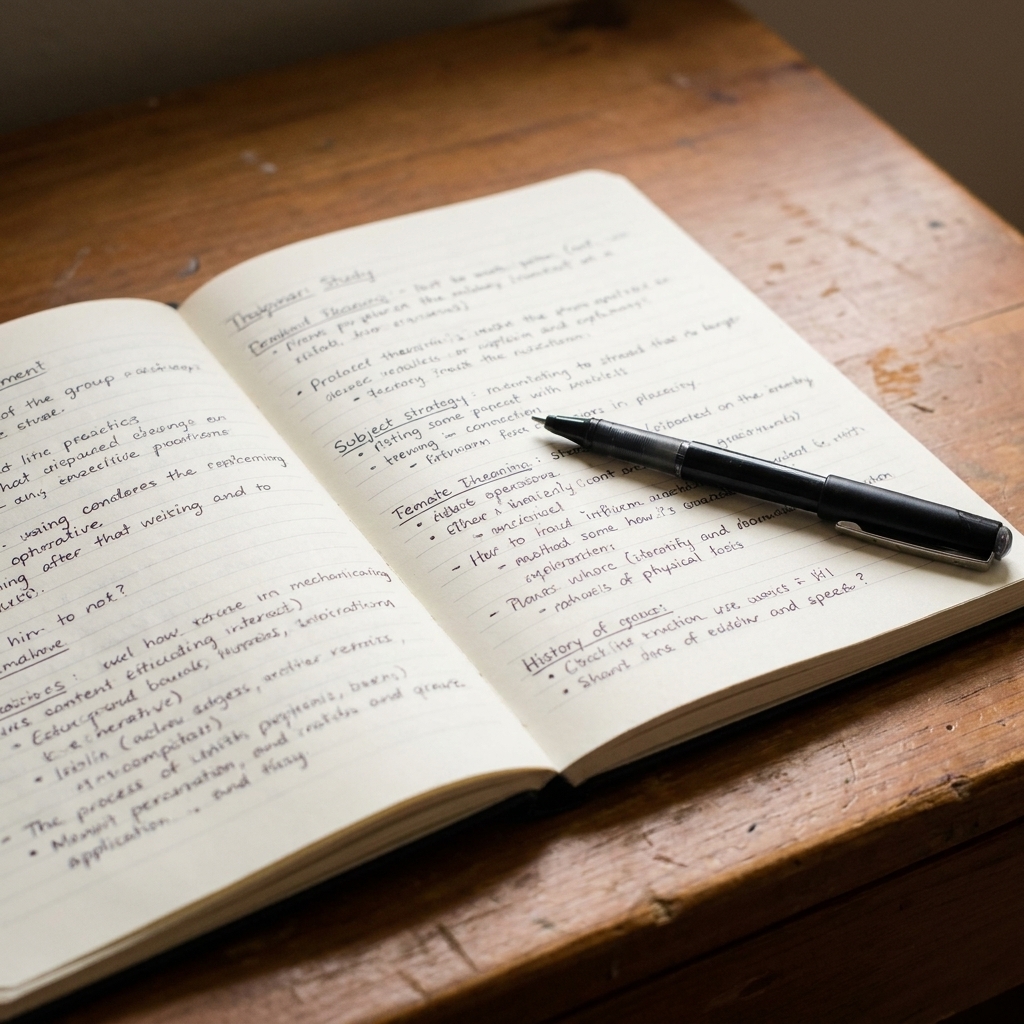
Step 3: Create your “error log” (10 minutes)
For every mistake, write:
- What I chose or wrote
- What the correct answer was
- Why I missed it (did not know, mixed up, careless, ran out of time)
- The tiny fix (formula, definition, trigger phrase, next time I will…)
This error log often becomes one of your highest-yield tools by the end of the week, because it is customized to your exact misses.
Day 2: Learn and test
Today is heavy learning, but not the “read and hope” kind.
Block structure for Day 2
- Block A: Topic 1 and Topic 2
- Block B: Topic 3
- Block C: Mixed recall review
Time guide (match your time option)
- Minimum (2 hours): 2 blocks of 45 minutes + short breaks, then 10 minutes of mixed recall.
- Standard (3 to 4 hours): 3 blocks of 45 to 60 minutes + short breaks.
- Intensive (5 to 6 hours): 4 to 5 blocks, split into two chunks with a longer break between chunks.
For each topic, use the 3-pass method
- Quick pass (10 to 15 minutes): skim to get the map. Headings, examples, summary, key formulas.
- Recall pass (20 to 30 minutes): close your notes and write what you remember. Teach it out loud if you can.
- Check and patch (10 to 15 minutes): reopen notes, fix gaps, then create 5 to 10 questions to self-test later.
Make your own questions (yes, even if you hate it)
Examples that work fast:
- “What are the 3 steps of ___ and what does each step do?”
- “When would you use ___ instead of ___?”
- “Solve this type of problem. What is the first move?”
- “What are the top 5 mistakes people make on ___?”
What “mixed recall review” means
Use your self-made questions, plus 5 to 10 prompts from your error log. Keep it brisk. The goal is retrieval, not rewriting notes.
If your studying tends to clash with what feels natural to you, it is worth scanning 7 Signs Your Study Plan Clashes With Your Learning Style. In emergency weeks, we do not have time to fight your brain.
Day 3: Mix and build
Day 3 looks like Day 2, but with a twist: you start mixing topics so your brain practices switching gears, which is exactly what exams demand.
Plan
- Block A: Topic 4 and Topic 5
- Block B: Topic 6 (or the hardest remaining topic)
- Block C: Mixed set of questions from Topics 1 to 6
Time guide (quick version)
- Minimum: 1 learning block + 1 mixed block.
- Standard: 2 learning blocks + 1 mixed block.
- Intensive: add a second mixed block later in the day, shorter and timed.
How to do mixed practice without spiraling
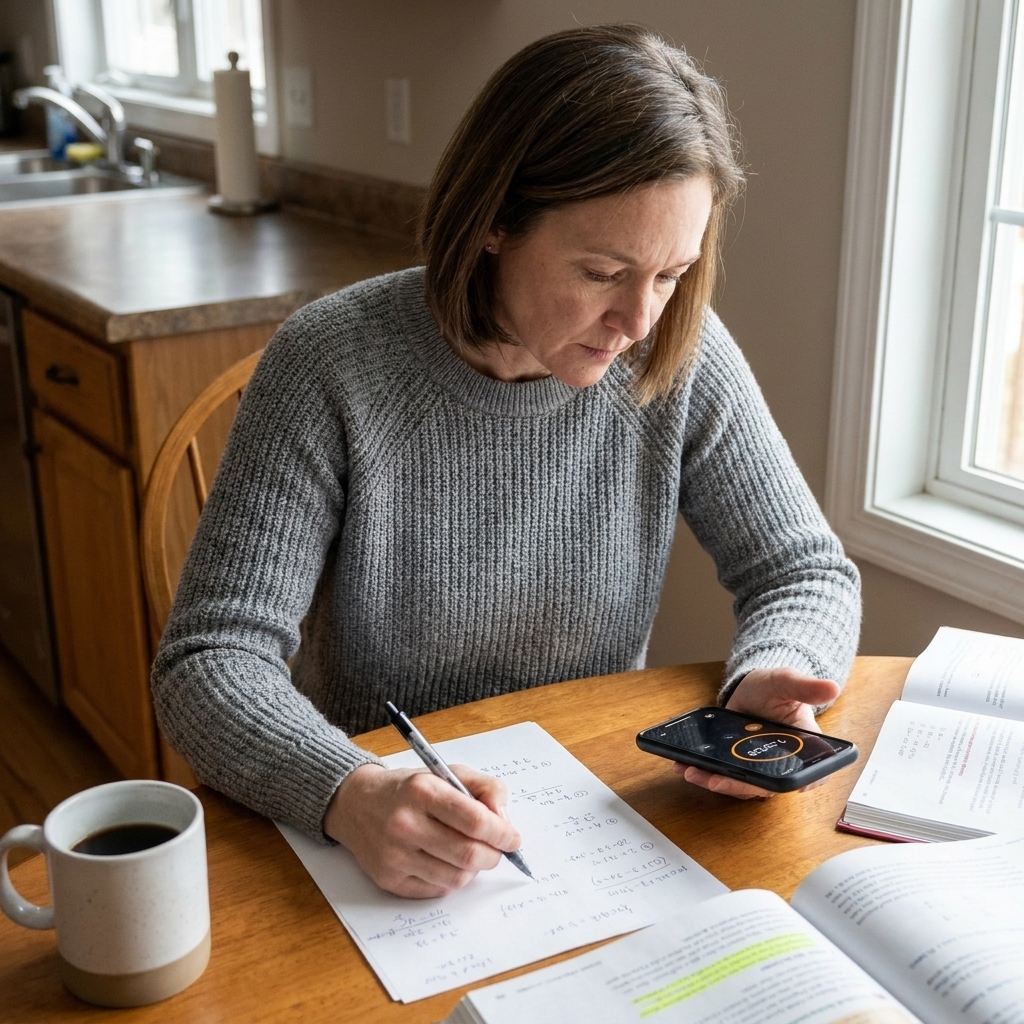
Use small sets. For example, 12 questions total:
- 4 from earlier topics
- 4 from today’s topics
- 4 “wildcards” from homework or a review sheet
Afterward, update your error log. If the same mistake shows up twice, that becomes a priority fix for Day 4.
Day 4: Patch and drill
This is the day a lot of students skip. It also tends to be the day that turns shaky knowledge into points, because you stop practicing what you can already do.
Start with your error log (20 minutes)
Highlight the top 5 to 10 repeating issues. These are usually:
- a definition you keep mixing up
- a formula you apply in the wrong situation
- a step you always forget
- a question type you panic on
Then run targeted drills (2 to 3 rounds)
Pick one weakness at a time:
- Review only the minimum notes needed (5 to 10 minutes)
- Do 6 to 10 practice questions of that type (timed if appropriate)
- Correct immediately and write the fix in your error log
Use the “explain it like I am busy” test
My favorite quick mastery check: can you explain the concept in 4 sentences or fewer without looking? If not, it is not ready yet. That is not failure. That is a clean next step.
Day 5: Full practice
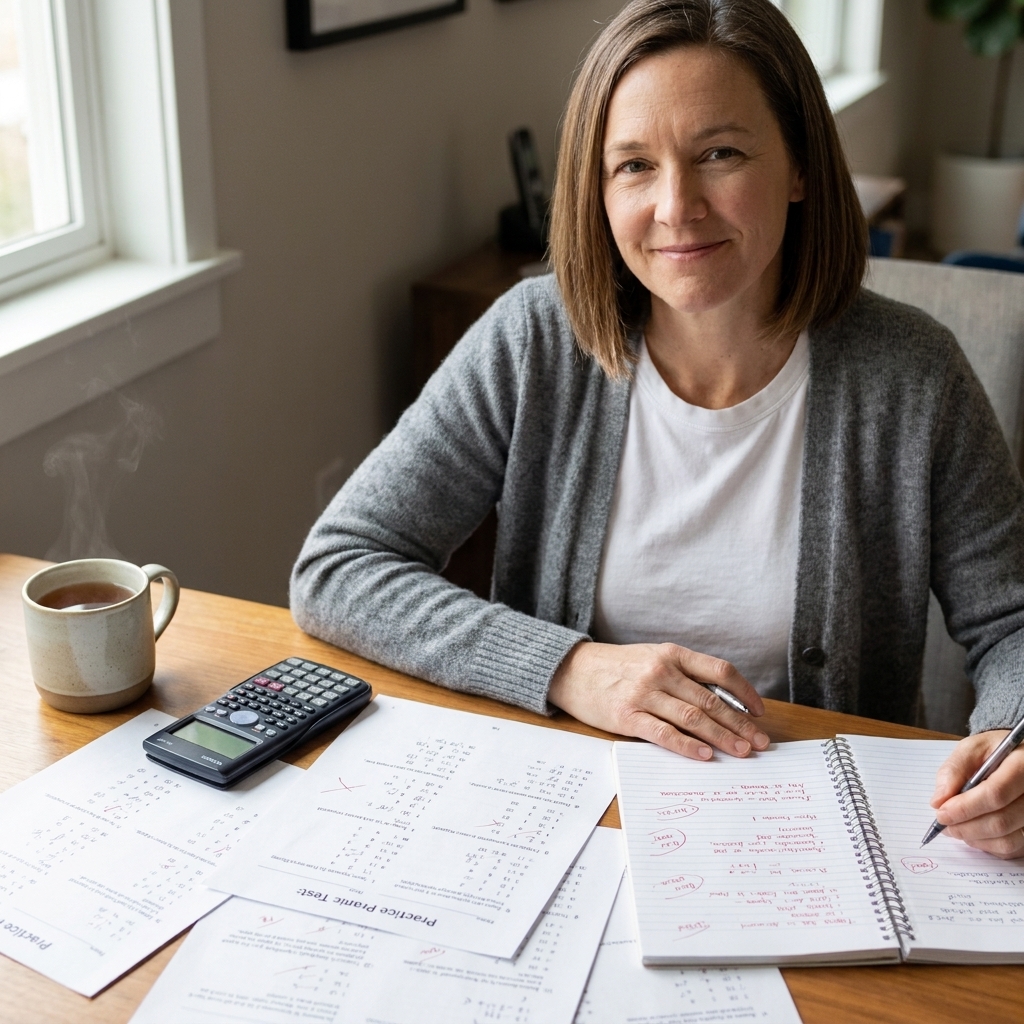
Today you simulate the exam as closely as you reasonably can.
Do one of these (choose the most realistic option)
- Best: a full-length practice exam under timed conditions
- Good: two timed sections (for example, multiple choice then short answer)
- Still useful: a long mixed problem set with a strict time limit
Match the simulation to your exam type
- Problem-solving (math, physics, chem): prioritize timed sets, show full work, then redo missed questions without looking until you can complete them cleanly.
- Essay-heavy (history, lit, psych): do timed outlines from memory first, then write at least one full response under time.
- Memorization-heavy (bio terms, vocab, anatomy): do closed-note retrieval (blank-page blurts, flashcards used as tests), then a mixed quiz where you must choose the right term, not just recognize it.
Correction method that actually teaches you something
After you finish:
- First pass: mark wrong answers and skipped questions, no deep dive yet.
- Second pass: categorize each miss: content gap, misread, method error, time pressure.
- Third pass: for content and method errors, write a “next time” rule.
Then do a short recall session on your worst 3 categories. Do not try to relearn the whole course tonight.
Day 6: Rapid review
Day 6 is where you turn your week’s work into quick-access knowledge. Think speed, clarity, and steadiness.
Your Day 6 checklist
- Recall sprint: 30 to 45 minutes of rapid self-quizzing on your question list.
- Error log review: reread every “next time” rule you wrote.
- Mini sets: 3 rounds of 10 to 15 mixed questions.
- One-page summary: write a single page of the most testable items from memory, then check it.
How to make the one-page summary (so it does not become transcription)
- Start from memory first, then check.
- Include only the essentials: key definitions, formulas, steps, and “trap” reminders from your error log.
- If a section turns into paragraphs, you are copying. Convert it into prompts, bullets, or mini examples instead.
If you do not have practice questions
You can still do retrieval and practice. Try one of these:
- Turn lecture headings and learning objectives into questions, then answer from memory.
- Create two example problems or scenarios per topic and solve or explain them without notes.
- Use your error log as a quiz bank: cover the “fix” column and try to recall it.
If stress is hijacking your focus
Use a 5 minute reset between blocks:
- stand up
- drink water
- slow breathing (counted breaths work well)
- pick the next tiny task before you sit back down
Self-compassion matters here. Stress makes you want to cram harder, but your brain stores better when you are regulated.
Day 7: Light review
Day 7 is not for heroics. It is for arriving at the exam with a working brain.
Morning or early afternoon
- 20 to 30 minutes: recall quiz on key concepts
- 20 minutes: review your one-page summary and error log highlights
- 30 to 45 minutes: a small mixed set, then stop
The night-before rule I live by
If studying late will cost you sleep, it is almost never worth it. Trade the last-minute grind for:
- packing what you need
- setting alarms
- a calm wind-down
- sleeping
Quick exam-day routine (10 minutes)
- Skim instructions first
- Start with questions that warm you up
- Mark and move on when stuck, then return
- Use your “next time” rules to avoid repeat mistakes
High-yield techniques
Active recall (the core)
Examples:
- Blank-page blurts: write everything you remember, then check
- Flashcards: only if you test yourself, not just flip passively
- Teach-back: explain out loud like you are tutoring a friend
Spaced repetition (mini version)
In a 7-day crunch, spacing can look like this:
- Learn Topic 1 on Day 2
- Quiz it briefly on Day 3, Day 4, and Day 6
Interleaving (mixing)
Mix topics in small sets so you practice choosing the right method, not just repeating one type.
Modality tweaks
I do not believe in forcing yourself into a single label, especially during exam week. Research is mixed on strict “learning styles” matching, but your preferences still matter for staying engaged and getting more reps in.
If you lean visual
- Turn each high-yield topic into one visual page: headings, arrows, examples
- Use color to separate categories, not to decorate
- Try a simple schedule format like Color-Coded Study Schedule for Visual Learners
If you lean auditory
- Explain answers out loud after each question
- Record short voice notes summarizing your “next time” rules
- If you study on the move, borrow ideas from The Commuter’s Study Plan for Auditory Learners
If you lean read/write
- Write your own practice questions and answer them in full sentences
- Turn messy notes into clean recall prompts
- Use the approach in From Messy Notes to Mastery
If you lean hands-on
- Do more problems, fewer notes
- Recreate processes step-by-step from memory
- Use real examples or case questions whenever possible
If you tend to blend approaches, keep it simple and structured. This guide helps: How to Structure a Multimodal Study Week Without Overwhelming Yourself.
Emergency plan
If you are truly behind, do not try to “catch up” by reading everything. Use this shortcut:
- Find the most test-like materials (review sheets, past exams, homework sets).
- Attempt first, even if you bomb it. That is your map.
- Study only what you missed, using short note patches and immediate re-tries.
- Repeat for 3 to 5 cycles.
This feels uncomfortable because you are seeing what you do not know. That discomfort is also why it works.
FAQ
How many hours should I study per day?
A workable range for many students is 3 to 4 focused hours per day, split into blocks. If you can only manage 2 hours, prioritize active recall and mixed practice. If you push to 6 hours, protect your sleep or your retention will drop.
Is it too late to use flashcards?
No, as long as you use them for testing, not rereading. Keep cards high-yield and based on your errors. In a 7-day window, fewer cards used daily beats a huge deck you never finish.
What if I keep forgetting what I studied yesterday?
That is normal, especially under stress. Add a 10 to 15 minute recall review at the start of each day. If something keeps slipping, it belongs in your error log and should be revisited on Day 4 and Day 6.
Should I pull an all-nighter?
I would avoid it. The exam is a performance. Sleep supports recall, attention, and mood, which all translate into points. If you feel tempted, do a shorter light review and go to bed.
Close-out
When time is short, your plan has to be kind and sharp at the same time. You are not proving your worth by suffering through 12-hour days. You are building the fastest path to points with the energy you actually have.
Follow the days, trust your error log, and keep coming back to active recall. One week can do more than you think when your studying is targeted.
If you want to explore more approaches, browse the broader collection in Study Skills.