

I used to think “learning to read” was mostly a visual thing: flashcards, letter charts, pointing at words on a page. Then I watched a little kid who clearly did better with listening melt down over yet another worksheet, and light up instantly when we turned the exact same skill into a sound game. Same letters, same goal, totally different doorway.
If your early reader understands best through listening, repeating, and rhythm, these auditory learning games are a gentle way to build phonics without turning your day into a tutoring session. The focus is simple: help kids hear the sounds in words, hold them in working memory, and blend them smoothly into speech.
One quick note before we start: “auditory learner” is not a permanent label. Think of these as sound-first strategies that help many kids, especially those who perk up with talk, music, and repetition.
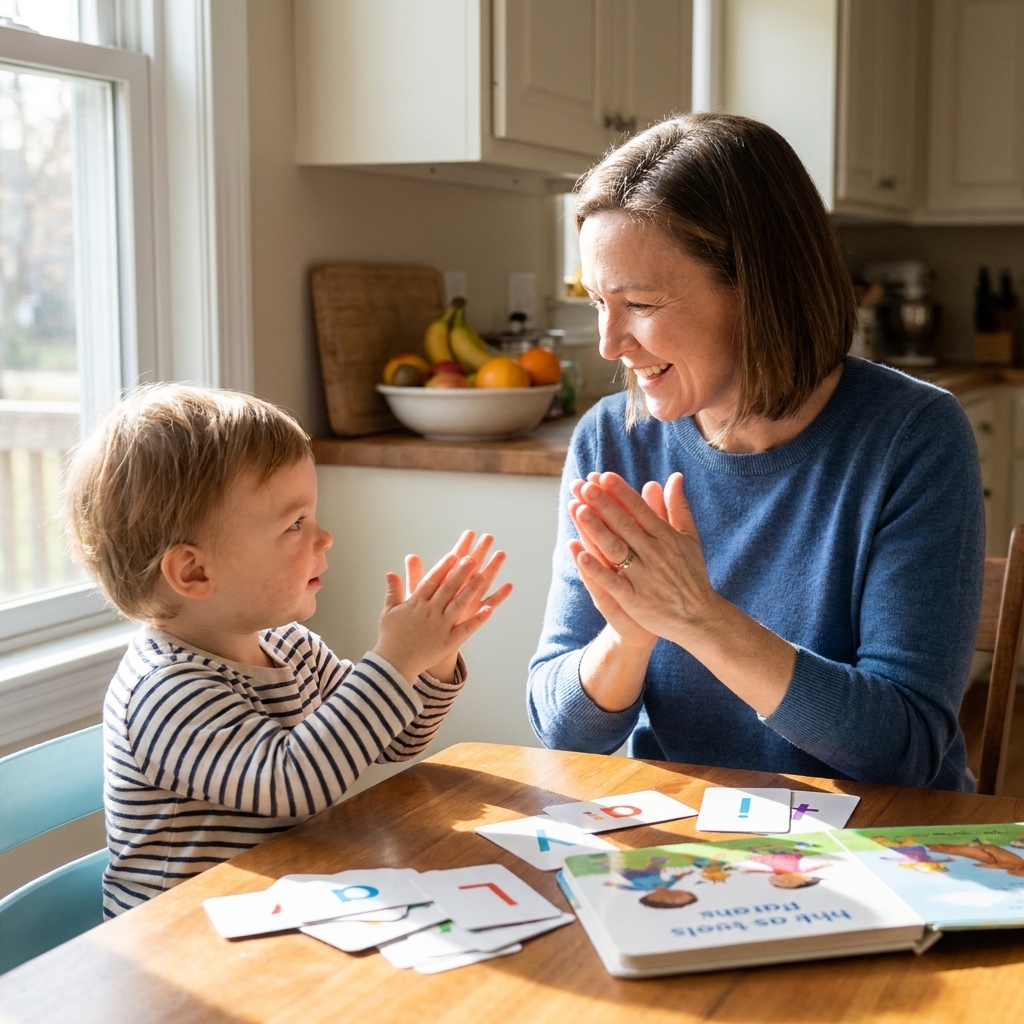
What kids need to sound out words
Sounding out is not just “knowing letter sounds.” Early readers also need to:
- Discriminate sounds (hear the difference between /b/ and /p/).
- Segment (pull a word apart into sounds: /s/ /a/ /t/).
- Blend (push sounds together to make a word).
- Keep a short sound sequence in mind long enough to blend it.
Kids who respond well to sound-based practice often do best when it is:
- Short (2 to 10 minutes)
- Interactive (call-and-response beats silent work)
- Rhythmic (clapping, tapping, chanting)
- Repetitive in a comforting way (same game, new words)
If you want a broader overview of learning preferences, start with our learning styles guide and then keep this page as your “what do we do today?” list.
Call-and-response games
Call-and-response is magic for kids who like sound because it turns phonics into a mini conversation. It also gives you instant feedback on what they heard. You say it, they echo it, you adjust it, they try again.
1) Sound Echo
Best for: letter sounds, digraphs (sh, ch, th), quick daily warmups
How to play:
- You say a sound clearly: “/mmmm/.”
- Your child echoes it back: “/mmmm/.”
- Level up by changing volume or pitch: whisper echo, robot echo, sleepy echo.
Make it reading-connected: After a few echoes, say a word that starts with that sound: “moon.” Ask, “What sound did you hear first?”
2) Blend and Echo
Best for: CVC blending (sat, map, pig)
How to play:
- You say sounds spaced out: “/s/ ... /a/ ... /t/.”
- They echo the sounds back.
- Then you say, “Blend it!” and model: “/s/ /a/ /t/ → sat.”
- They copy the blend: “sat.”
Tip: If they struggle, shorten the pause between sounds. Many kids need the sounds closer together at first.
3) Sound Switch (sound swapping)
Best for: hearing sound changes, building decoding flexibility
How to play:
- Start with an easy word family: “sat.”
- Say: “Keep the end, change the first sound to /m/.”
- They respond: “mat.”
- Rotate: /c/ to make “cat,” /h/ to make “hat.”
Keep it kind: If they guess wrong, treat it like a sound experiment. Repeat the two options slowly and ask which one matches your change request.
4) Question and Answer Sounds
Best for: segmenting and listening for middle or final sounds
How to play:
- You ask: “In map, what sound do you hear at the end?”
- They answer: “/p/.”
- Switch roles when they are ready and let them ask you.
This “sound detective” style is great for kids who love being in charge for a minute.
Rhyming games for sound awareness
Rhyming games strengthen phonological awareness, which supports early reading because kids start to notice repeating sound patterns. Rhyming alone is not the whole decoding puzzle, but it is a playful way to build listening skills that make phoneme work easier. Keep it light. If your child is not rhyming yet, model heavily and celebrate attempts.
5) Rhyme Time Rapid Fire
Best for: listening for rime patterns (-at, -ig, -op)
How to play:
- Pick a word family: “-at.”
- You say: “cat.” They say: “hat.”
- Go back and forth for 30 to 60 seconds.
Easy mode: Offer two choices: “Does cat rhyme with hat or hip?”
6) Silly Rhyme or Real Rhyme?
Best for: auditory discrimination, confidence for kids who fear mistakes
How to play:
- You say two words: “log, dog.”
- They answer: “Real rhyme!”
- Then you say: “log, lid.” They answer: “No rhyme.”
Important: Include nonsense rhymes sometimes (like “zog, log”). It teaches that rhyming is about sound, not “real words.”
7) Finish My Rhyme
Best for: prediction, listening, blending practice
How to play:
- You start a simple sentence: “I see a cat wearing a ...”
- Pause and let them finish: “hat!”
- Swap to other easy pairs: sun fun, bug hug, boat coat.
Keep sentences short and goofy. The giggle is part of the glue.
Clapping and tapping games
Rhythm makes sounds stick. I also like clapping games because they keep bodies busy in a productive way, which helps kids who wiggle their way through lessons.
8) Clap the Parts (syllables)
Best for: syllable awareness, longer words, smoother reading
How to play:
- Say a word: “butterfly.”
- Clap each syllable: but-ter-fly (3 claps).
- Let your child pick the next word from the room: “ta-ble,” “win-dow.”
Why it helps: Syllable control makes decoding less overwhelming when words get longer.
9) Tap and Blend (phonemes)
Best for: segmenting and blending CVC words
How to play:
- Use the table, your leg, or the floor.
- Tap once per sound: /m/ (tap) /a/ (tap) /p/ (tap).
- Then slide your hand across the surface as you blend: “map.”
Common snag: Kids often tap syllables instead of phonemes at first. That is normal. Just switch to super short words and model slowly.
10) Sound March
Best for: holding sounds in memory, blending while moving
How to play:
- Choose a 3-sound word.
- Step forward for each sound: step /s/, step /a/, step /t/.
- Then jump and say the blended word: “sat!”
Safety note: Keep it to a clear hallway or open room. We want learning, not a bruised shin.
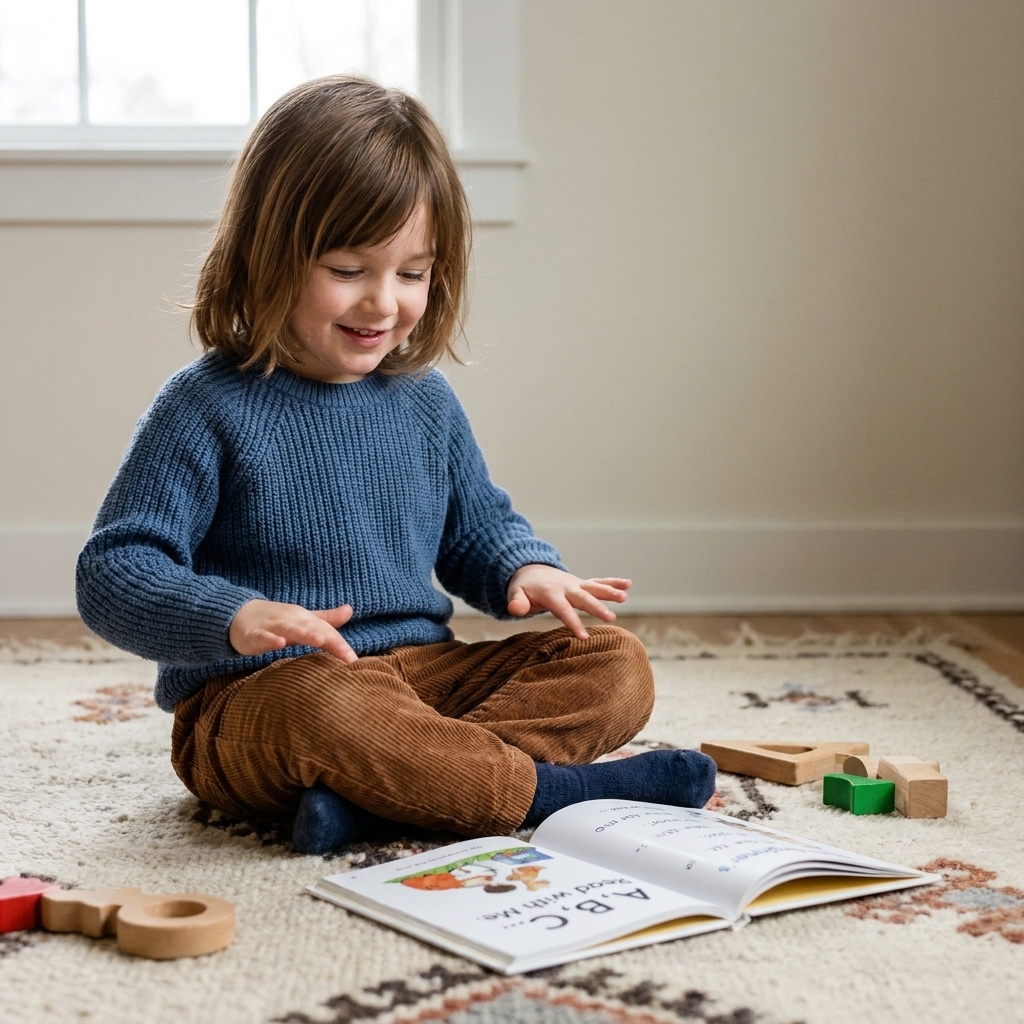
A simple daily routine
If you only take one thing from this article, take this: kids who like sound often thrive on a tiny routine they can predict. Here is a structure I use because it stays consistent while the words change.
Minute-by-minute (10 minutes)
- 1 minute: Sound Echo (2 to 4 sounds)
- 2 minutes: Tap and Blend (3 CVC words)
- 2 minutes: Sound Switch (same word family)
- 2 minutes: Rhyme Time Rapid Fire
- 3 minutes: Read two or three short lines from an early reader, then pause to “blend and echo” any stuck word
My favorite rule: stop while it is still going well. Ending on success keeps tomorrow easier.
If your child loves timed challenges, you can adapt a short interval format similar to Pomodoro. We have a breakdown of adapting timed study to different learners in Pomodoro by learning style. For kids, think “micro bursts,” not long timers.
How to choose words
You do not need a massive word list. You need the right difficulty level.
Start here (easier)
- CVC words with continuous sounds that are easier to stretch: m, s, f, n, l (sat, sun, fun, man)
- Word families: -at, -an, -it, -op
Save for later (harder)
- Words with stop sounds that are often harder to stretch clearly: b, p, t, d, g, k (some kids can hold parts of these longer than others, and that is fine)
- Consonant blends: st, bl, tr
- Digraphs and vowel teams if they are not introduced yet
A quick “just right” test
Pick 5 words. If your child can blend 3 out of 5 with only a little help, you are in the sweet spot. If it is 0 to 1 out of 5, make it easier. If it is 5 out of 5 with no effort, bump up slightly.
Fit it to your child
If your child is shy
- Do “whisper echo” and sit side-by-side instead of face-to-face.
- Let a stuffed animal “answer” first, then your child repeats.
If your child is high energy
- Use Sound March and tap games.
- Keep turns fast. Long explanations lose the moment.
If your child gets frustrated easily
- Use “two tries then I help” as a steady boundary.
- Mix in easier words on purpose so their brain gets a win.
- Switch to rhyme listening games when decoding feels too sharp.
And if you are unsure whether your current approach fits your child’s learning preferences, you might relate to 7 signs your study plan clashes with your learning style. It is written for older learners, but the same idea applies: when the method matches the moment, everything feels less like a fight.
Common mistakes
Mistake: Going too long
Fix: Cap game time at 10 minutes. If they are begging for more, great, stop anyway and save that motivation for tomorrow.
Mistake: Correcting every tiny mispronunciation
Fix: For phonics practice, be clear but calm. Repeat the sound correctly and have them echo. Keep your tone “coach,” not “judge.”
Mistake: Mixing too many new skills at once
Fix: Pick one focus per week (CVC blending, then digraphs, then blends). The games can stay the same.
Mistake: Treating listening games like they do not count
Fix: They count. Strong phonological awareness is a real reading foundation. Listening is not “less than,” it is step one for many kids.
Speech sound note
If your child cannot physically make a sound yet (common with sounds like /r/ and /l/, and with some blends), do not turn phonics into a battle for perfect pronunciation. You can still practice listening, sorting, and noticing the sound in words. If you are worried about speech clarity or your child seems stuck producing many sounds, a speech-language pathologist can help you sort out what is developmentally typical and what needs support.
When to get extra help
Some kids just need more time and more playful repetition. But it is worth getting support sooner rather than later if you notice patterns like these:
- After weeks of gentle practice, your child still cannot hear the difference between many common sounds (for example, /b/ vs /p/), even with lots of modeling.
- CVC blending stays extremely hard over time, with little improvement, even when you simplify words and shorten sessions.
- Reading practice leads to intense anxiety, shutdown, or frequent tears that do not ease with shorter, easier routines.
- There is a family history of dyslexia or persistent reading difficulty, and you are seeing similar signs early.
You are not being dramatic by asking questions. Early, supportive help can make everything feel more manageable.
FAQ
How often should we play these sound games?
A practical starting point is 5 to 10 minutes a day, 4 to 6 days a week. Consistency beats marathon sessions. If that feels like too much, do 3 minutes. Really.
What age are these games for?
Many work well from preschool through early elementary, especially during the stage where kids are learning letter sounds and starting to decode simple words. Adjust difficulty by changing the words, not by making the game more complicated.
My child memorizes books but cannot sound out new words. Will this help?
Often, yes. Memorizing text can be a strength, but sounding out needs explicit practice in segmenting and blending. Start with Tap and Blend and Blend and Echo using very easy CVC words.
Should I show letters while we do the sound games?
Sometimes. If your goal is decoding on the page, connect sounds to letters for a minute or two at the end. But if letters trigger frustration, do the listening version first, then add print briefly when they are calm and successful.
A gentle next step
Pick two games from this list and repeat them all week. Same structure, new words. That small repetition is where many kids make their biggest leap, because their brain starts to anticipate the pattern and focus on the sounds.
If you want more kid-friendly ideas beyond phonics, our Learning Activities for Kids guide rounds up options that work across different learning preferences.