

When I was a kid, “take a quick break” usually meant I paced the hallway, did a lap around the living room, and came back to my homework somehow more distracted. It took me a long time to learn this: a lot of high-energy kids do not need a break from movement. They often need a break with movement, followed by a clear landing ramp back into the next task.
Below are 10 kinesthetic learning activities you can use as short, physical brain breaks. Each one is designed to burn off extra energy (or offer calming “heavy work”) and then make it easier to transition back into a daily study plan without a meltdown.
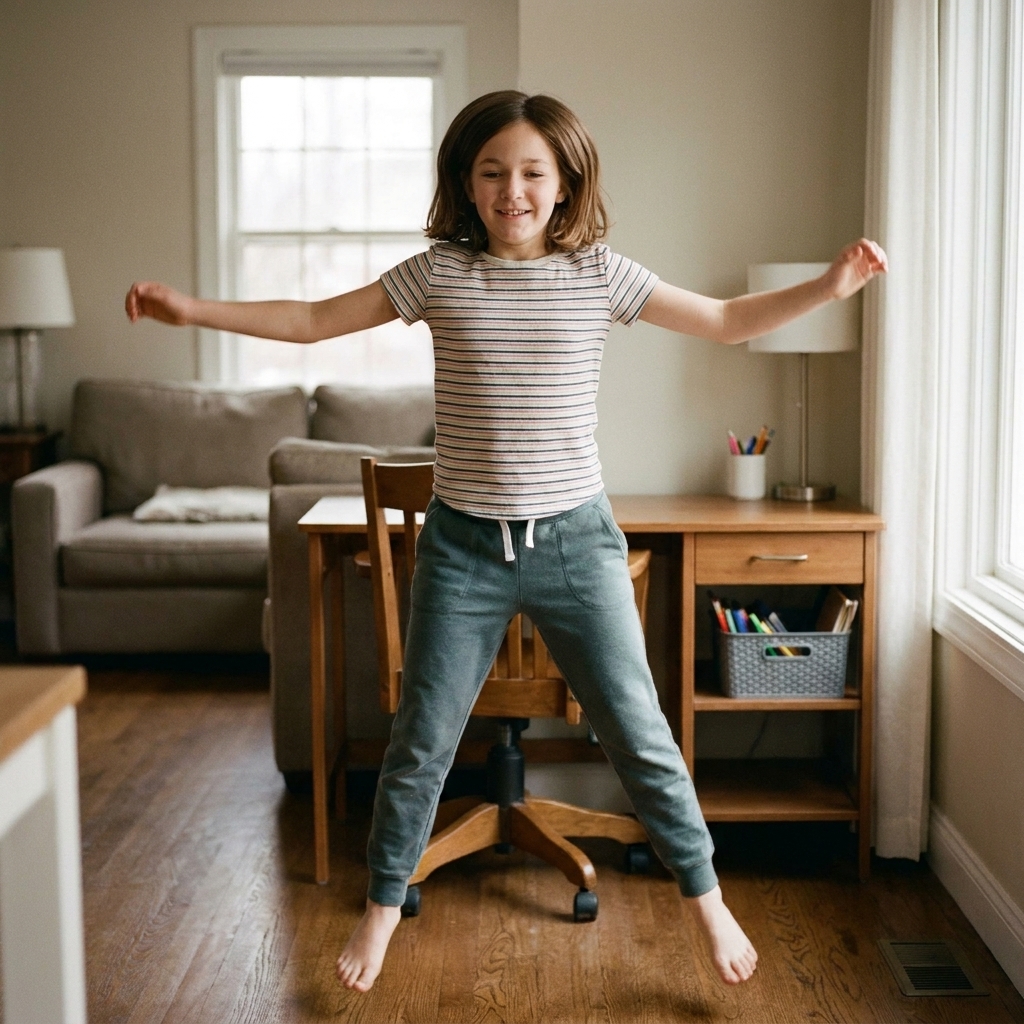
Before you start: a 30-second setup
Most homework breaks fall apart for a few common reasons: they go too long, the return feels abrupt, or the “break” turns into wandering. Here is the simple setup I use (and recommend to parents) to keep movement breaks helpful instead of chaotic.
- Pick a time box: a few minutes is usually enough. Many kids do well with 3 to 8 minutes, but some need a quick 1 to 2 minute reset, and others do fine with closer to 10.
- Choose the “return task” first: for example, “We will do 3 math problems” or “We will write 2 sentences.”
- Clear a tiny safe zone: push the chair in, move pencils and water cups, and give a 3-step boundary like “feet stay on the rug.”
- Plan the finish: every break ends with a 20-second calm cue (breaths or slow wall pushes). This is the secret sauce for refocus for many kids.
If you want a longer routine for breaks that support attention (not just energy burn), pair these with the ideas in Strategic Study Breaks.
10 kinesthetic learning activities
1) Animal walks (pick two, then switch)
Time: 3 to 6 minutes
This is my go-to for kids who need full-body input fast. Choose two “animals” and do a short down-and-back path in a hallway or across a room.
- Bear crawl: hands and feet on the ground, hips up.
- Crab walk: hands and feet, belly up.
- Frog jumps: squat, hands down, jump forward.
- Penguin waddle: heels together, toes out, slow steps.
Make it a learning activity: call out spelling words or multiplication facts on each turnaround.
Finish with the calm cue: 3 slow breaths.
2) Stair steps or step-ups
Time: 2 to 5 minutes
If you have stairs, go up and down at a calm pace. No racing, no skipping steps. If you do not have stairs, use a sturdy bottom step or a low aerobic step for step-ups.
- Set a target like 40 step-ups total, switching lead leg halfway.
- For younger kids, count by 2s, 5s, or 10s as they step.
Safety note: have an adult nearby, and use a rail or wall for balance if needed. Avoid slippery socks. Non-slip socks, secure shoes, or barefoot on clean, dry stairs can be safer choices in many homes.
Finish with the calm cue: hands on belly, 3 slow breaths.
3) Wall push-ups and countertop push-ups
Time: 3 to 6 minutes
Sometimes kids look “busy” because they need heavy work, not speed. Strength-based movement can be wonderfully regulating, and it is usually quieter than jumping.
- Wall push-ups: 10 to 20 reps.
- Countertop or table-edge push-ups: 6 to 15 reps (hands on a stable surface, feet back).
- Wall sit: hold for 15 to 45 seconds.
Make it a learning activity: do one rep per vocabulary word definition, or have them explain one math step out loud while holding a wall sit.
Safety note: I skip chair dips for most kids because tipping and shoulder strain are real. If you do them, use a heavy, non-slip chair and close supervision, but in most homes, push-up variations are the safer win.
Finish with the calm cue: 10 slow wall pushes.
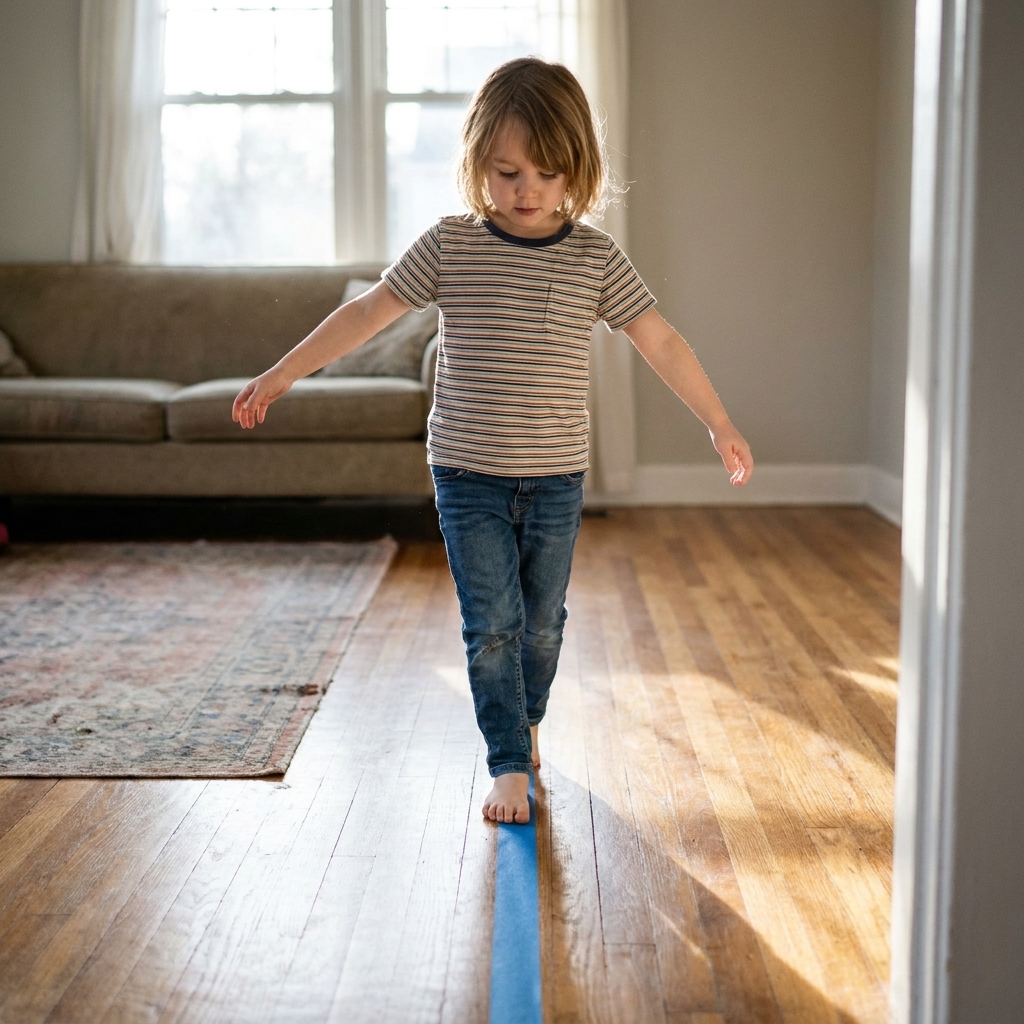
4) Tape line balance and hops
Time: 4 to 8 minutes
Put a strip of painter’s tape on the floor as a simple balance beam. This gives movement plus concentration, which is a powerful combo for returning to homework.
- Walk heel-to-toe along the line.
- Hop on one foot for 5 hops, then switch.
- Side-step along the line like a crab.
Level up: call out a category (animals, countries, books) and name one item per step.
Finish with the calm cue: hands on shoulders, squeeze and release 5 times.
5) Mini scavenger hunt
Time: 5 to 10 minutes
This one works especially well when a child is stuck in avoidance mode. Give them a short list of objects to find and bring back to the homework spot.
- Pick 3 to 6 items max (example: something soft, something that starts with B, something round).
- Keep boundaries clear (which rooms are allowed).
Make it a learning activity: tie the clues to what they are studying, like “find something that represents a solid” or “find something that is an example of a fraction.”
Finish with the calm cue: 3 slow breaths, sitting down at the homework spot.
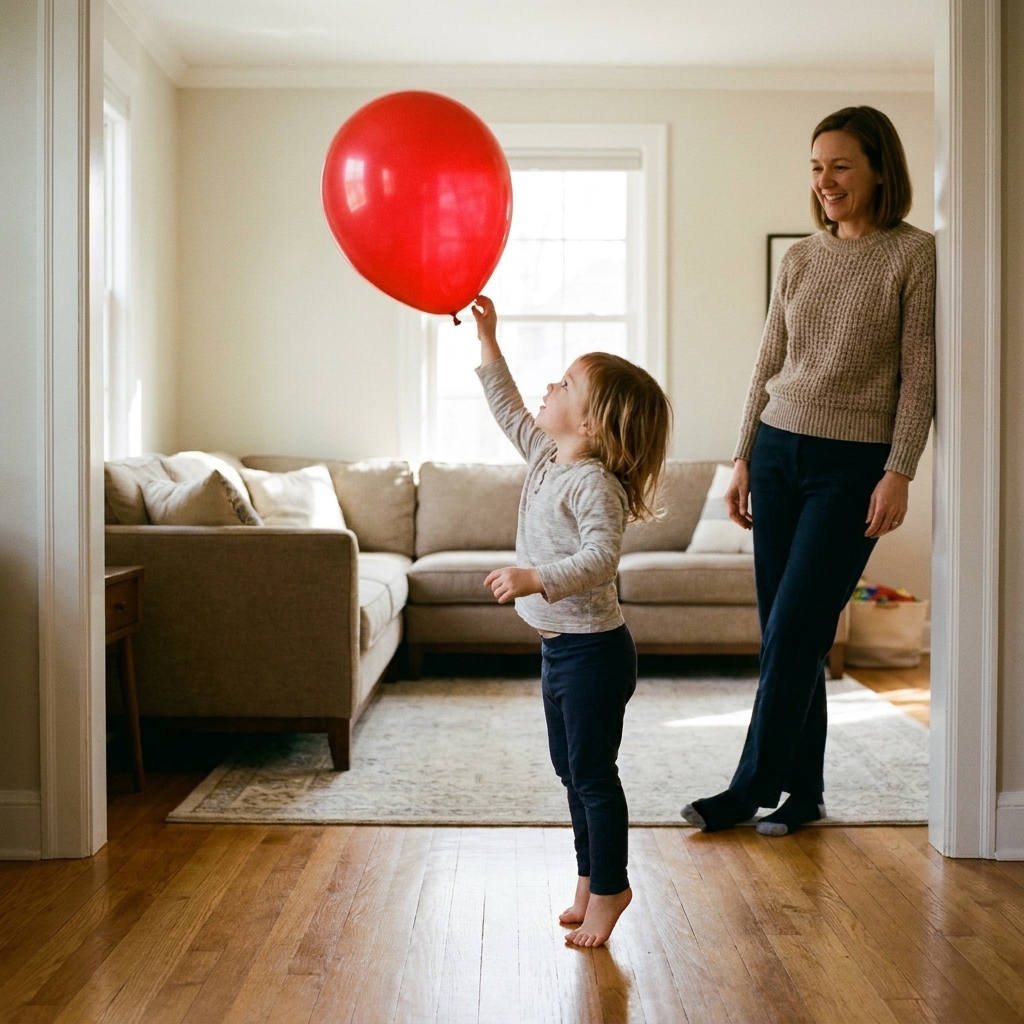
6) Balloon keep-up
Time: 3 to 7 minutes
Use one balloon and the rule is simple: keep it off the ground. It is gentle on joints and works in small spaces.
- Only tap with hands for round one.
- Only tap with elbows for round two.
- Alternate left and right hand for round three.
Extra regulation: sit and squeeze the balloon slowly 10 times with both hands (heavy work for the hands).
Finish with the calm cue: one deep breath in, one slow breath out, repeated 3 times.
7) Jumping jack ladder
Time: 2 to 5 minutes
This is for the kids who need a quick burst. It also sneaks in counting skills.
- Do 5 jumping jacks.
- Rest 10 seconds.
- Do 10 jumping jacks.
- Rest 10 seconds.
- Do 15 jumping jacks.
Adjust: start at 3, 6, 9 for younger kids, or do squats instead of jumps if you need a quieter option.
Finish with the calm cue: 10 slow wall pushes.
8) Spelling toss (soft ball or rolled socks)
Time: 5 to 8 minutes
This is one of my favorite ways to blend movement with academics without it feeling like more homework. Use a soft foam ball or two rolled-up socks.
- Stand 4 to 8 feet from a laundry basket or a taped target on the wall.
- Say a word or math fact.
- They toss once, then spell the word aloud or explain the fact.
Variation: one toss per letter (short words) or one toss per syllable (longer words).
Note: keep it soft. This is not the break for hard balls indoors.
Finish with the calm cue: hands pressed together, 10 seconds, then sit.
9) Cross-body coordination (a calmer reset)
Time: 2 to 4 minutes
If a child comes back from a break even more revved up, cross-body patterns can be a helpful way to shift gears. It is not magic, but it can add just enough structure to help the body settle.
- Cross crawls: touch right hand to left knee, then switch. Do 20 total.
- Windmill touches: feet wide, touch right hand to left foot, then switch. Do 10 total.
- Figure-eight arms: draw big sideways 8s in the air for 30 seconds.
Finish with the calm cue: hands on belly, 3 slow breaths.
10) Desk-chair circuit
Time: 4 to 8 minutes
When weather is bad or space is tight, a simple circuit around the homework area can work better than sending kids roaming through the house.
- 10 chair sit-to-stands (stand up and sit down slowly).
- 10 desk edge taps (tap the desk edge with alternating hands).
- 20-second wall sit or 20-second plank (modify as needed).
- Walk one lap around the room.
Repeat 2 rounds.
Make it a learning activity: after each station, they say one thing they remember from the last homework section.
Finish with the calm cue: sit down, 3 slow breaths, then start the return task.
How to pick the right break
If you are not sure which activity to try first, use this quick matching guide.
- If they are bouncing off the walls: jumping jack ladder, stair steps, animal walks.
- If they are irritable or “cranky tired”: wall push-ups, desk-chair circuit, balloon keep-up.
- If they are unfocused and silly: tape line balance, cross-body coordination.
- If they are avoiding the work: mini scavenger hunt, spelling toss.
Quick intensity dial: if your child comes back more energized than before, try a quieter heavy-work break next time (wall push-ups, wall sit, slow step-ups, tape line balance). If they come back sluggish, a short burst (animal walks or a small jumping jack ladder) can be the better match.
Kinesthetic learners often do best when their study plan includes movement on purpose, not just during breaks. For more ideas that blend learning styles, see Learning Activities for Kids and my breakdown of tactile and movement-friendly studying in the Feynman Technique for Visual, Auditory, and Tactile Learners.
Back to homework: my 2-step re-entry
This is the part that matters most. A great movement break still needs a gentle landing.
Step 1: calm cue (20 seconds)
- 3 slow breaths, or
- 10 slow wall pushes, or
- hands on shoulders, squeeze and release 5 times
Step 2: tiny win (2 minutes)
Do a small, clear chunk immediately.
- Two math problems
- One sentence written neatly
- One paragraph read aloud
- One quick review using notes
Once the tiny win is done, many kids settle back into the groove more easily.
Safety and sanity notes
- Keep breaks short. If your child begs for “one more minute,” that can be a sign the break is working. It does not always mean you should double it.
- Skip movement breaks when you should. If your child is injured, dizzy, in pain, having an asthma flare, or the space is not safe, choose a calmer reset (water, a few breaths, a quick stretch, then the tiny win).
- Choose quiet movement when needed. Strength and balance breaks are your best friends in apartments or shared spaces.
- Protect the homework zone. Put drinks and pencils out of the movement area first.
- Watch for overheating. A sip of water after the calm cue is fine, just avoid turning it into a kitchen wander.
- Neurodiversity note. If your child has sensory needs and certain movements clearly help or clearly backfire, trust that pattern. An occupational therapist can help you build a personalized list of regulating “heavy work” options for your home.
- Self-compassion over perfection. If today’s break turns goofy, reset and try a calmer option next time.