

When my attention slips, I do not try to “power through.” I reset the system. Kids need the same kindness. If your child melts down the moment homework appears, it is often not laziness. More often, their focus tank is already empty.
The good news is that focus skills can often be strengthened. Not with hour-long brain workouts, but with short, playful reps that practice executive-function skills like listening, inhibition (stopping yourself), working memory, and task switching. Below are eight fast games you can do in 2 to 8 minutes, then move straight into homework while their brain is already “online.”
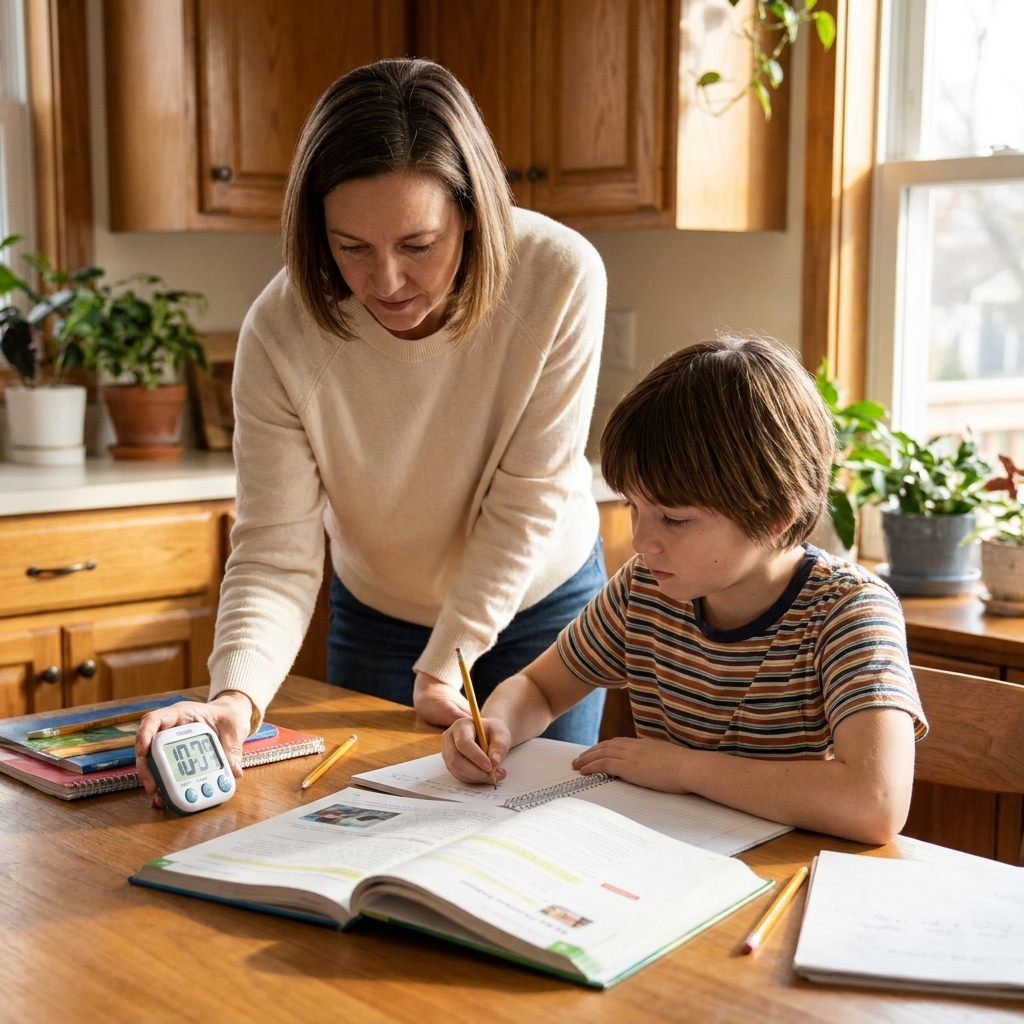
How to use these games without a fight
Think of these as a warm-up, not a reward or a bribe. The goal is to build mental endurance gradually.
- Pick one game and do it before homework for 3 to 5 days.
- Keep it short: stop while it is still fun.
- Stack it with a predictable routine: game, quick drink of water, then first homework task.
- Use a tiny timer for the homework start: 5 to 10 minutes is enough at first.
If your child does well with short bursts, you will love our guide to strategic study breaks (the same idea works for kids, just scaled down).
8 focus games that help with homework
Each activity below includes what it trains, how to play, and an easy way to level it up over time.
1) Simon Says (inhibition and listening)
What it trains: selective attention and impulse control, which is basically “listen first, act second.”
How to play (2 to 5 minutes): Give simple commands. They only follow commands that start with “Simon says.” Mix in tempting actions: “Touch your nose,” “jump,” “clap.”
Make it homework-friendly: Use school actions: “Simon says underline,” “Simon says point to the title,” “Simon says read the question twice.”
Level up: Speed it up slowly, or add two-step commands: “Simon says touch your elbow, then sit down.”
2) Memory Match (working memory and persistence)
What it trains: holding information in mind while staying calm.
How to play (5 to 8 minutes): Use a small set of cards (or sticky notes with symbols). Lay them face down. Take turns flipping two to find a pair.
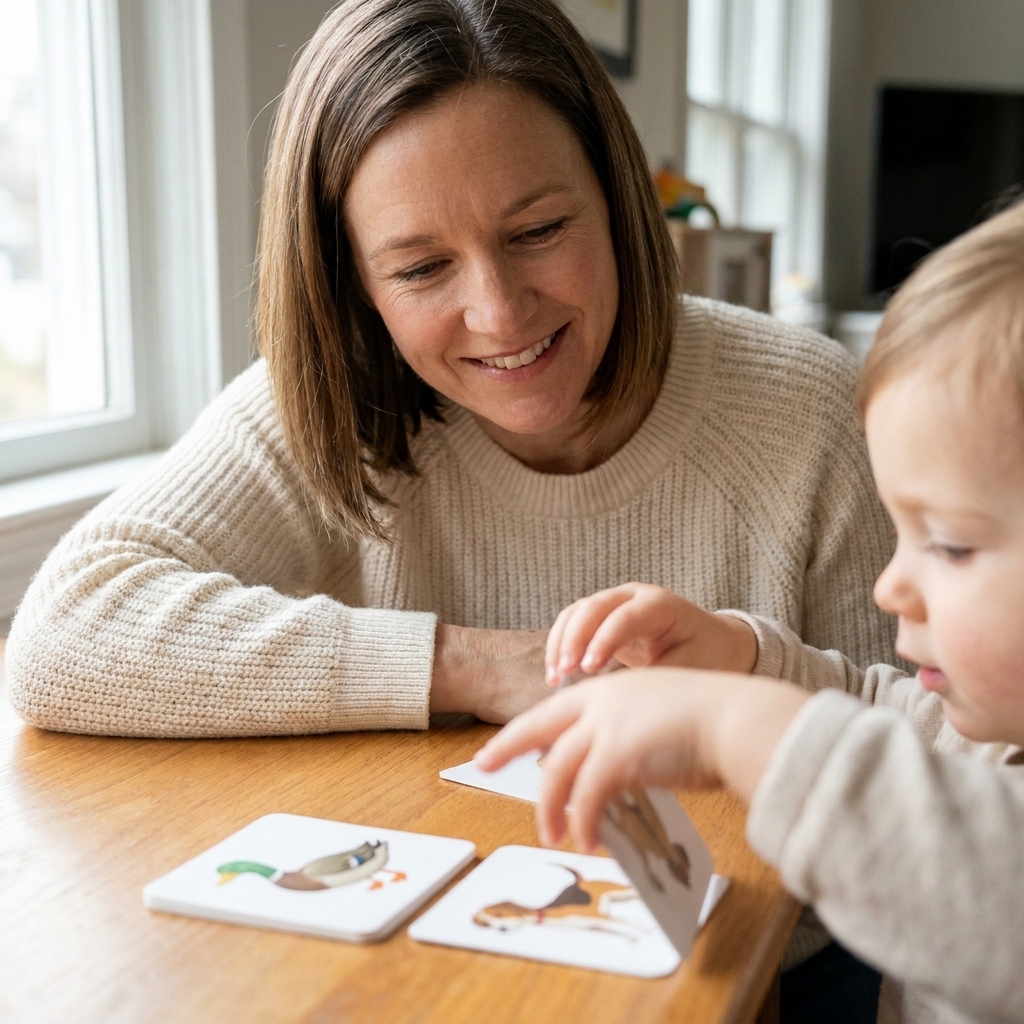
Make it homework-friendly: Match “problem type” pairs, like fraction cards that match to a visual fraction model, or a vocabulary word to its definition.
Level up: Add 2 more pairs every few days instead of jumping to a big set.
Age tweak: For ages 5 to 7, start with 4 to 6 pairs. For older kids, use 8 to 12 pairs or add one “trick” pair that is close but not a match.
3) Copycat Claps (auditory attention and sequencing)
What it trains: listening accuracy and holding a sequence long enough to reproduce it.
How to play (2 to 4 minutes): Clap a pattern (clap-clap-pause-clap). They repeat it. Then they create a pattern and you copy.
Make it homework-friendly: Turn it into “copycat steps.” You say the homework start routine as a sequence: “Open notebook, write date, read directions.” They repeat it back, then do it.
Level up: Increase pattern length by one beat only when they are successful twice in a row.
4) Freeze Game (start-stop control)
What it trains: shifting from action to stillness on cue, a key part of staying on task.
How to play (3 to 5 minutes): Put on a short song section or clap a rhythm. When you say “freeze,” they stop and hold still for 3 seconds. Then resume.
Make it homework-friendly: After the last freeze, go straight to “freeze your body, start your first question.” It connects body control to work start.
Level up: Increase freeze time from 3 seconds to 5, then 7.
5) Odd One Out (focus and categorizing)
What it trains: attention to detail and explaining reasoning, which supports comprehension.
How to play (3 to 6 minutes): Say four items: “apple, banana, carrot, grape.” They pick the odd one out and explain why.
Make it homework-friendly: Use class topics: “noun, verb, adjective, multiplication” or “triangle, square, circle, cube.”
Level up: Ask for two possible answers with different reasoning. That builds flexibility without pressure.
6) The Whisper Chain (volume control and sustained listening)
What it trains: sustained attention and careful decoding. Whispering can naturally slow the pace and reduce overstimulation for some kids.
How to play (2 to 4 minutes): Whisper a short phrase. They repeat it exactly. Switch roles.
Make it homework-friendly: Whisper the instructions from the worksheet, then have them say it back in their own words. This is a gentle bridge into reading directions.
Level up: Increase phrase length gradually, or add one “challenge word” from vocabulary.
7) Spot the Change (visual attention)
What it trains: noticing differences and holding an image in mind, which supports proofreading and math accuracy.
How to play (3 to 5 minutes): Put 6 to 10 small objects on a table. Let them look for 10 seconds. They close their eyes. You change one thing (move an item, swap two, remove one). They guess the change.

Make it homework-friendly: Use school supplies only. It subtly cues “this is a work zone now.”
Level up: Change two things once one-change is easy.
Age tweak: For younger kids, start with 3 to 5 objects. For older kids, add similar-looking items (two pencils, two erasers) to increase the challenge.
8) Beat the Timer (gentle urgency without stress)
What it trains: starting quickly, staying with one task, and finishing a tiny goal. This is a confidence builder.
How to play (3 to 6 minutes): Choose a micro-task: “Put away 10 LEGO pieces,” “write your name and date,” or “solve one problem.” Set a short timer. The goal is not speed, it is staying engaged until the timer ends.
Make it homework-friendly: Use this as the first homework block. Keep it winnable. If your child struggles with time pressure, focus on “work until the timer ends” rather than “finish before it beeps.”
Level up: Add 1 minute per week, not per day.
If timers tend to backfire in your house, try a learning-style friendly version of Pomodoro from Pomodoro by learning style and borrow the gentler options.
Quick environment check: If you are hitting a wall every day, test the basics first: snack, water, movement, and a calmer workspace (less noise, fewer visual distractions). Sometimes the “game” your child needs is simply a reset.
A note for neurodivergent kids: These games can be supportive for kids with ADHD, autism, anxiety, or learning differences, but they are not a substitute for an evaluation. Also, some kids find whispering, clapping, or timers irritating or stressful. If a game increases friction, swap it out. The goal is a smoother start, not compliance.
A 10-minute pre-homework routine
If you want an easy starting point, here is the routine I suggest to parents who want fewer negotiations at the table.
- 2 minutes: pick one game from the list (same game all week).
- 1 minute: water break and bathroom check.
- 5 minutes: “Beat the Timer” for the first micro-task.
- 2 minutes: quick movement break, then start the next homework block.
For kids who need to move to focus, pair these games with a couple of the ideas in kinesthetic learning activities for homework breaks.
Make wins visible
Focus often improves faster when a child can see that it is improving. I like systems that make progress obvious with almost no effort from the parent.
- Use a simple check-off: “Game done,” “started,” “first 5 minutes,” “one problem checked.”
- Keep the first task tiny: the real victory is starting calmly.
- End with a quick review: “What helped your brain focus today?” One sentence is enough.
If your child responds well to visuals, a homework station you can actually maintain makes a difference. See a visual homework board kids will use.
When games are not enough
These activities are great for building skills and lowering resistance. But if you are seeing extreme struggles, it is worth zooming out.
- If homework regularly takes hours despite support, the workload or expectations may be mismatched.
- If attention issues show up everywhere (play, meals, conversations), consider talking with your pediatrician or a school professional for screening and support.
- If emotions spike first (tears, anger, shutdown), start with regulation: snack, movement, connection, then work.
My north star is always the same: build a system that helps your child feel capable. The goal is not perfect concentration. It is a smoother start, a few more minutes of steady effort, and less stress for everyone.