

There is a specific kind of after-school chaos that can make even the calmest kid look like they are “choosing” to melt down right when homework appears. I used to interpret that spike in silliness, irritability, or zoning out as procrastination. But the more I paid attention, the more it looked like a nervous system problem, not a motivation problem.
Kids walk out of school carrying a full backpack of sensory input: loud rooms, bright lights, lots of transitions, constant self-control, and social problem-solving. Expecting instant focus at the kitchen table is like asking an adult to go straight from a jammed commute into a tax audit.
This guide is a routine-building approach I love because it is simple: decompress first, then do. Below are four transitional activities that calm the body, organize attention, and create a predictable bridge into study time.
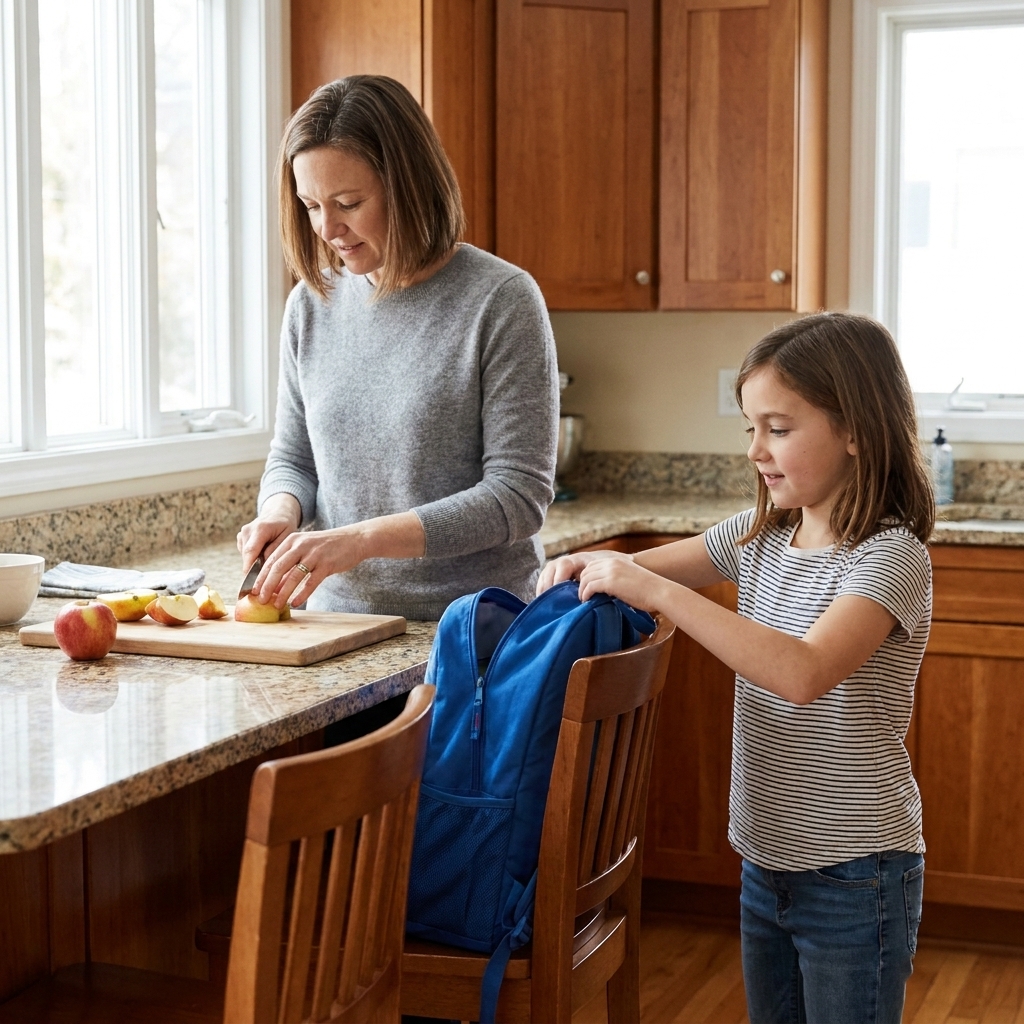
What decompression does
After-school decompression is not about “killing time.” It is a short routine that helps a child shift states. Most kids need support moving from:
- high stimulation (school, bus, pickup line, aftercare) to lower stimulation (homework focus)
- external control (bells, rules, instructions) to self-directed effort (starting tasks independently)
- social performance (being “on”) to recovery (resting, regulating, refueling)
Think of it as a landing strip. You are not lowering standards. You are making it more likely your child can meet them without a fight.
How to use the activities
A routine that works
- Duration: 10 to 25 minutes total (shorter for younger kids)
- Order: snack or hydration first if hunger is a factor, then one regulating activity
- Rule of one: choose one decompression activity per day, not all four
- Predictability: do it at the same time and in the same general place when possible
If you want a simple script, here is mine: “First we reset, then we start.”
Set a safe boundary
These activities work best when kids trust that decompression is real and not a trick to lure them into homework. I recommend stating the transition plainly:
- “You can pick one reset activity. When the timer ends, we start the first tiny homework step together.”
- “Decompression is to help your brain switch gears, not to avoid homework.”
Micro-decompression for busy days
If your afternoons are packed (aftercare pickup, sports, a long commute), aim for a 2 to 5 minute version. The goal is still the same gear shift, just smaller.
- In the car: two minutes of quiet, water, and one question like “What does your brain still feel full of?”
- At the door: shoes off, bathroom, and a 60-second “heavy work” job (carry a bag, push the backpack to the drop zone, wall push-ups).
- At the table: two-minute brain dump before anyone says the word “homework.”
Activity 1: Snack-and-Story Reset
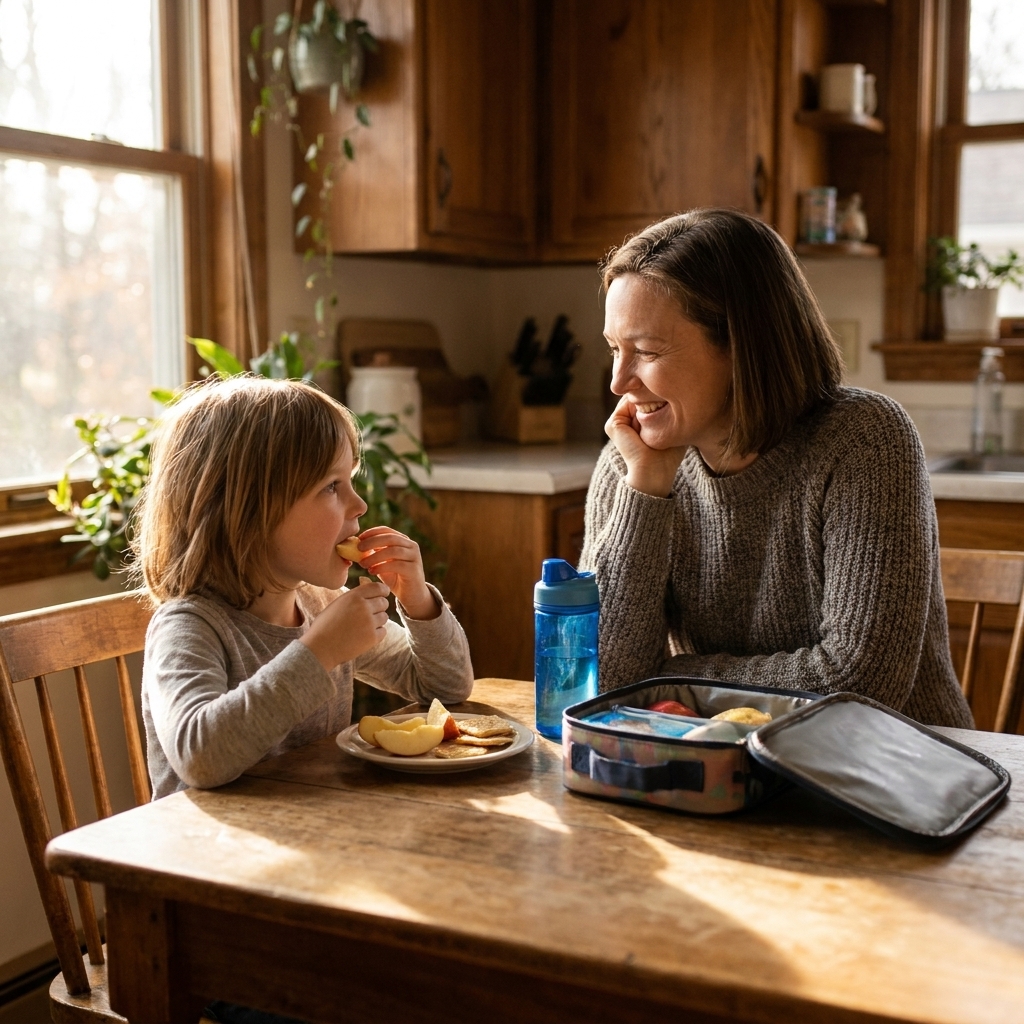
If your child is even slightly hungry, homework is more likely to feel irritating, impossible, or unfair. This reset combines a steady snack with a low-pressure connection moment, which often reduces arguing later.
How to do it (10 to 15 minutes)
- Offer a protein-plus-carb snack and water.
- Keep the environment calm: lower volume, fewer questions at once, no screens if screens tend to ramp them up.
- Ask one predictable question, not an interview.
Prompts that do not backfire
- “What was one good thing and one hard thing?”
- “What is something your brain is still thinking about from today?”
- “If today had a weather forecast, what would it be?”
Make it study-friendly
When the timer ends, do not jump straight to “Go do your homework.” Bridge gently: “Let’s do the first two minutes together.” That tiny start matters.
Activity 2: Heavy Work Mini-Circuit
“Heavy work” is one of my favorite transitions because it is practical and fast. It uses pushing, pulling, carrying, or squeezing motions that give strong body feedback. For many kids, that kind of input can feel calming and organizing. If it revs your child up, switch to a quieter option like the brain dump or drop zone.
How to do it (5 to 10 minutes)
Pick 3 to 5 items and do each for 30 to 60 seconds:
- Wall push-ups
- Carry books from backpack to a shelf, one stack at a time
- Chair pushes (slowly push a sturdy chair in and out at the table, supervised)
- Animal walks to the bathroom for handwashing (slow and controlled, not a race)
- Refill everyone’s water bottles or fill a small water pitcher for the table (supervised)
Make it feel like a mission
Kids are more likely to do it when it has a purpose. Try: “Your job is to deliver these library books to the shelf,” or “We need a reset job to help your body switch gears.”
Safety notes
- Keep it low impact and short.
- Avoid anything that gets them overly amped if that is a pattern (jumping contests, racing, wrestling).
- If your child has pain, injuries, or medical considerations, stick to gentle options.

Activity 3: Sensory Drop Zone
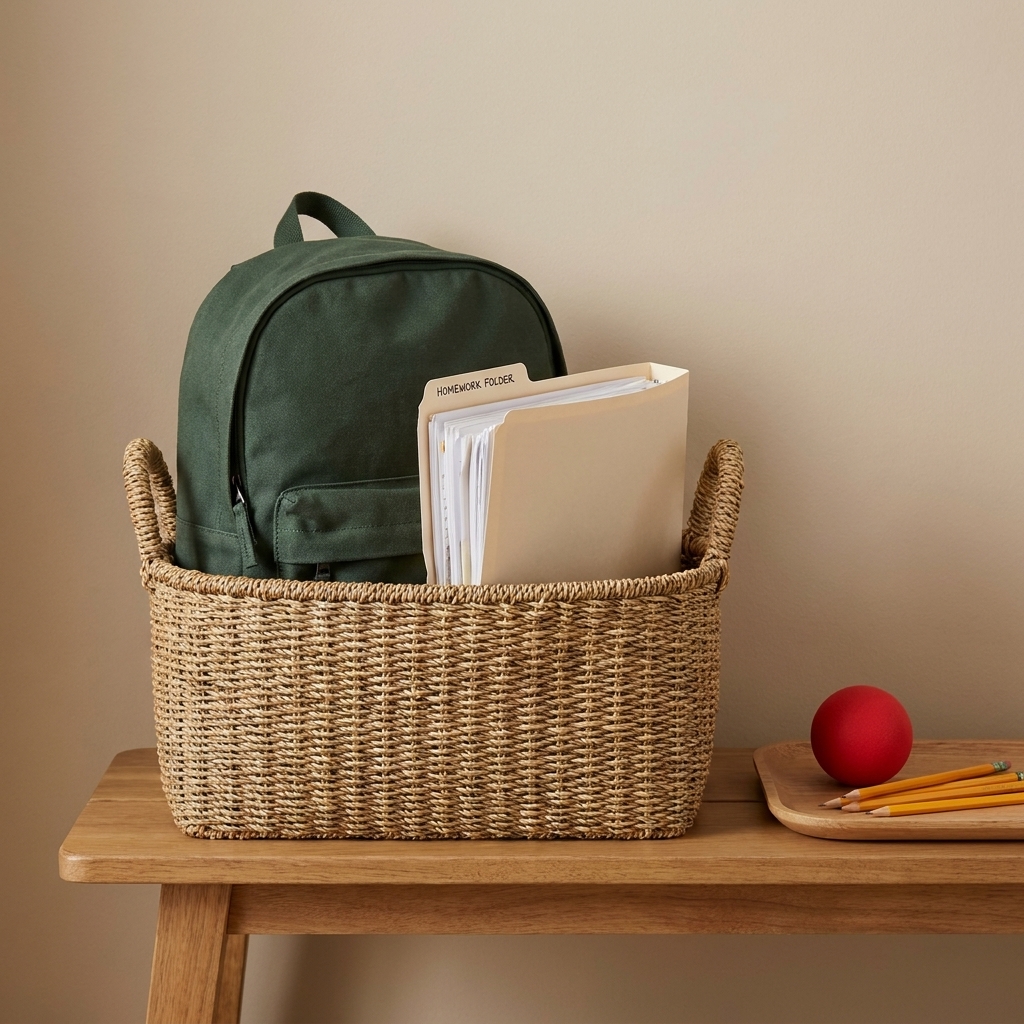
This one is deceptively powerful because it solves two problems at once: sensory overload and transition clutter. A consistent drop zone reduces the frantic searching that can derail the first 10 minutes at home.
What a drop zone includes
- A basket or bin for backpack and folder
- A small tray for “pocket stuff” (notes, tiny toys, permission slips)
- A calm sensory option: stress ball, therapy putty, a smooth stone, or a soft fabric square
How to run it (5 minutes)
- Child unpacks lunch items and puts homework folder in one consistent spot.
- Set a 2-minute timer for a sensory choice while you prep the study space.
- End with one micro-task: “Open the folder and show me what is due.”
Why this helps
Touch input plus a predictable home base can lower mental load. The goal is not perfect organization. It is fewer friction points between arriving home and beginning.
Activity 4: Two-Minute Brain Dump
Some kids are not dysregulated in their bodies. They are full in their minds. They walk in still replaying a recess conflict, a surprise quiz, or a teacher correction. If that mental tab stays open, focusing on homework can feel impossible.
How to do it (2 to 5 minutes)
- Give them paper or a notebook and a pencil.
- Set a timer for two minutes.
- Prompt: “Write or draw everything your brain is holding onto from today.”
Rules that keep it safe
- No grading, correcting, or spelling help.
- They do not have to show you unless they want to.
- If they share, reflect first. Problem-solve later.
Bridge to homework gently
When the timer ends: “Okay. Your brain has more space now. Let’s do the first step.” If homework is long, consider pairing this with a kid-friendly timer approach similar to Pomodoro. For older kids, you can adapt ideas from our guide on strategic study breaks to keep momentum without pushing into burnout.
Pick the right activity
If you are not sure where to start, match the activity to what you see right after school.
- Extra wiggly, loud, crashing into furniture: try the Heavy Work Mini-Circuit.
- Snappy, tearful, “I hate homework,” or quick to argue: try the Snack-and-Story Reset.
- Scattered, losing papers, cannot find anything: try the Sensory Drop Zone.
- Quiet but tense, stuck on something that happened: try the Two-Minute Brain Dump.
For a broader look at building routines that fit different kids, I also keep our Learning Activities for Kids guide updated with options that work for different attention spans and energy levels.
A sample routine
If you want a plug-and-play flow, here is a realistic version I like:
- 3:15 Arrive home, shoes off, bathroom, water
- 3:20 Snack-and-Story Reset (or another decompression pick)
- 3:35 “First tiny step” together (open folder, choose 1 task)
- 3:40 Work block (10 to 20 minutes depending on age)
- 4:00 Short break, then repeat if needed
If your child struggles with starting, you might also like the way we build momentum in Build a Study Session You Can Check. The same small win logic works beautifully for kids.
Troubleshooting
If decompression turns into delay
- Use a visual timer and keep the boundary calm.
- Offer one extension option: “You can have 2 more minutes, or we can save this for after homework.”
- End with a starter step that is almost too easy.
If your child gets more hyper
- Switch away from energizing inputs (fast music, screens, roughhousing).
- Try heavy work that is slower and more controlled, or a quieter sensory option (putty, a warm drink, dimmer lighting).
If it is really overwhelm
If homework consistently causes shutdown, tears, or avoidance even after a calm transition, zoom out. The workload or expectations might not match your child’s current skills or energy. In those cases, reducing friction inside the study plan helps. For older kids, our high-focus study plan has strategies you can adapt in a kid-appropriate way.
When to get extra help
Decompression can make afternoons smoother, but it is not a cure-all. If meltdowns are intense, frequent, or getting worse over time, or if homework triggers big anxiety, sleep issues, or physical complaints, it can help to loop in support. A quick conversation with your child’s teacher can clarify what the day is demanding, and your pediatrician can help you decide whether an evaluation or occupational therapy support makes sense for attention, anxiety, or sensory needs.
The goal
The biggest mindset shift I want to leave you with is this: decompression is not a reward for good behavior. It is a support for nervous system regulation and attention. When kids get that reset, homework becomes more doable and your evening feels less like a series of negotiations.
If you try one of these activities this week, keep it simple and repeatable. A consistent 10-minute bridge will beat an elaborate routine that only happens on your best day.